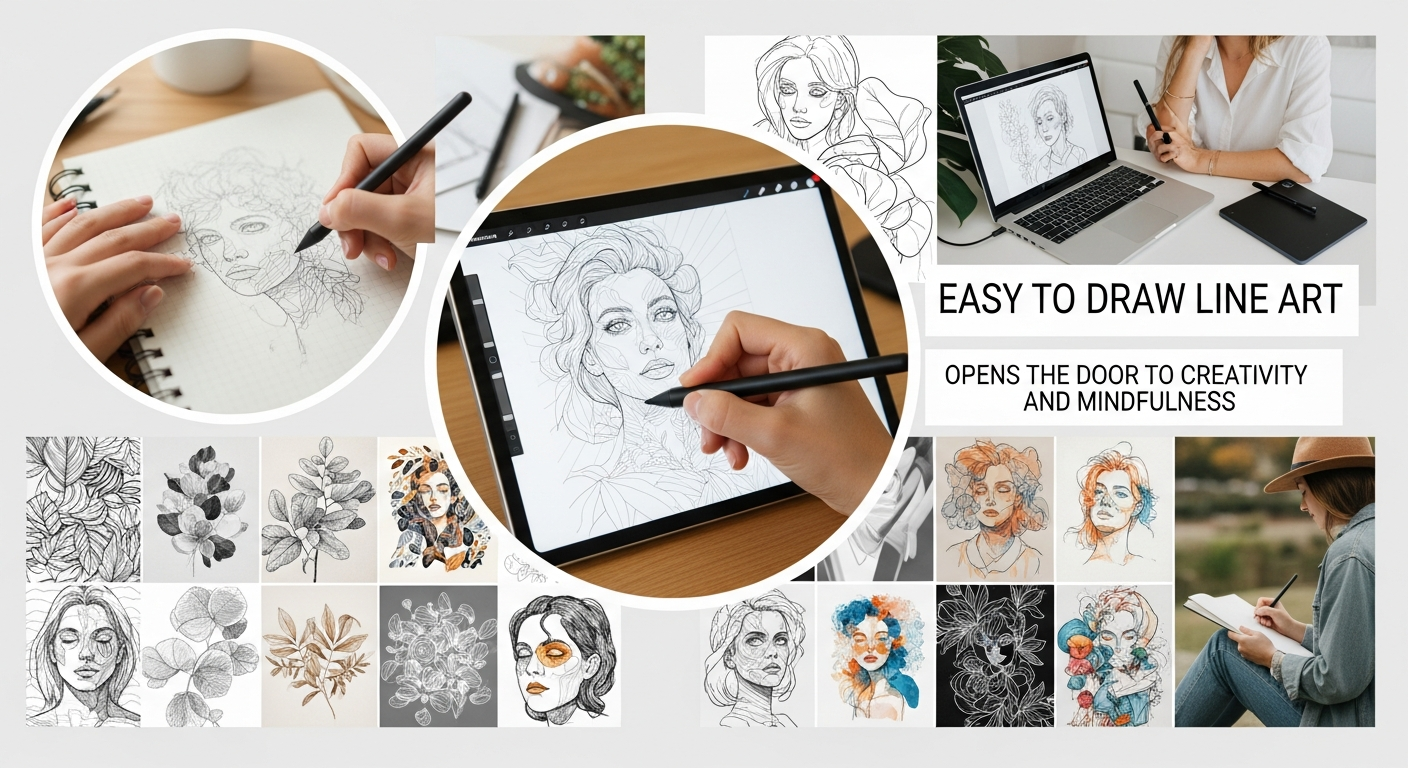
Line art doesn’t care about your excuses.
It’s the most brutal form of drawing because there’s nowhere to hide. No shadow to soften a weak angle. No color to distract from a clumsy curve. Just you and a line that either works or doesn’t. That’s why it matters.
This isn’t “accessible” art for people who want to dabble. It’s structural training. Line work forces you to commit – your hand either moves with intention or it betrays you on the page. Every mark is a decision. Every hesitation shows. That’s not beginner-friendly comfort; that’s discipline wearing the mask of simplicity.
The precision isn’t peaceful. It’s muscular. Your eye tracks the line before your hand does. You’re mapping form, measuring negative space, understanding where weight lives in a composition. Picasso stripped his bulls down to pure contour not because he wanted to relax – he did it because he understood anatomy well enough to discard what wasn’t essential. Schiele’s figures crack and fracture along their lines because he knew exactly where tension lived in the body.
Call it mindfulness if that sells it to people who need permission to make marks. But what you’re actually doing is building hand-eye coordination and spatial intelligence. You’re training your brain to see shapes instead of objects. That’s not meditation. That’s foundational work.
Professional illustrators return to line art because it exposes structural weakness immediately. Can’t fix a bad gesture with rendering. The line either carries the form or it collapses.
So yes – pick up a pen. But understand what you’re actually doing. You’re not making easy drawings. You’re learning to see.
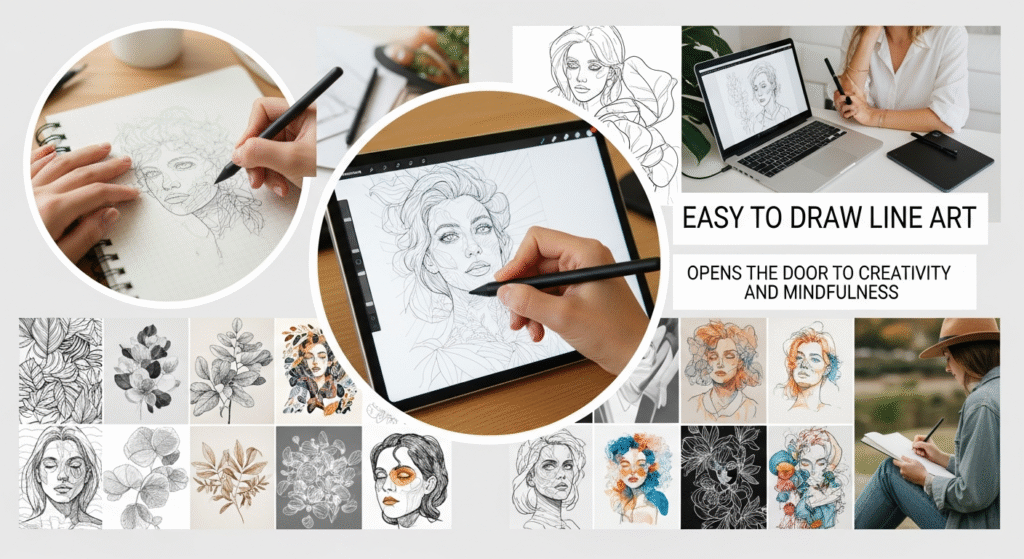
Key Points Summary: Easy Line Art
- Learn the basics of line quality, contour, and stroke control.
- Explore simple line art styles: minimalist, continuous, and botanical.
- Understand essential tools – from pens to digital tablets.
- Follow step-by-step exercises and digital drawing tips.
- Discover how to practice effectively and develop your own artistic style.
- Learn relaxation techniques through creative line exercises.
What Makes Easy to Draw Line Art So Appealing?
Line art is all about simplicity and expression. With just a few strokes, you can convey shape, emotion, and movement. It’s beginner-friendly because you don’t need expensive tools or advanced techniques—just a steady hand and an eye for design.
“Line art is where creativity meets clarity – a perfect playground for both beginners and pros.”
This minimalist approach makes it ideal for mindfulness and stress relief, similar to drawing simple mandalas (including mandala generator) or sketchbook journaling exercises. Practicing easy to draw line art improves hand control and visual awareness, helping you recognize proportions and balance—skills that apply to painting, digital art, and even design.
Line art’s charm also lies in its adaptability. You can use it to decorate notebooks, design t-shirts, or create digital prints. Many artists even turn their simple sketches into elegant wall art, proving that a few well-drawn lines can make a lasting impression.
Basics of Line Art
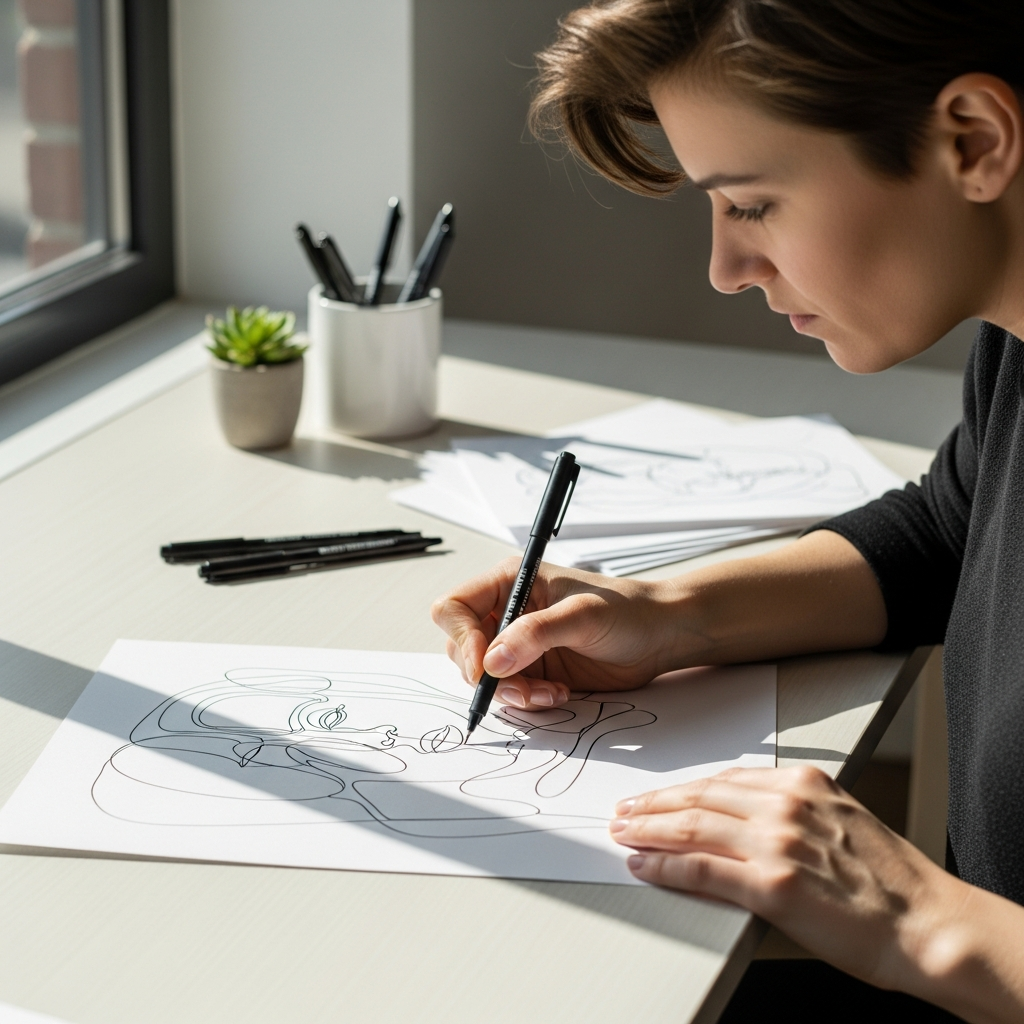
Before diving into full illustrations, practice the foundations of line quality:
- Line weight: Vary your pressure for thin or thick lines.
- Line direction: Combine straight and curved lines for balance.
- Contour drawing: Capture shapes by tracing edges in one continuous stroke.
- Flow and rhythm: Keep your lines fluid and confident, not rigid or mechanical.
- Negative space: Use gaps intentionally to suggest form and movement.
Try continuous line art, where you draw without lifting your pen – a technique that builds muscle memory and confidence. If your first few drawings look messy, that’s normal! The goal is not perfection but consistency.
Choosing the Right Tools for Easy Line Art
Your tools can make a huge difference in how your line art feels and flows. Choosing pens, paper, or digital brushes suited to your style will help your lines appear cleaner and more expressive.
| Type | Tools | Best For |
|---|---|---|
| Traditional | Micron pens, gel pens, smooth sketch paper | Beginners and casual sketching |
| Digital | XP-Pen, Wacom, iPad with Procreate | Clean digital line art and layered editing |
Using a Micron pen or gel pen helps you feel each stroke’s texture, while digital tools let you experiment freely with layers and brushes. Explore XP-Pen’s beginner guide and Adobe’s line art tutorials. You can also check our complete beginner drawing tools guide for detailed recommendations on ink types and tablet models.
If you prefer to work digitally, play with different brush textures and pressure settings. A fine-tuned digital brush can mimic real ink flow, giving your drawings a natural and polished look.
Simple Techniques to Get Started
Starting with easy to draw line art for beginners doesn’t require perfection – just curiosity and consistency. These warm-up exercises will prepare your hands and mind:
- Warm up with shapes: Draw circles, waves, and zigzags to loosen your hand.
- Practice continuous lines: Outline objects like cups or leaves without lifting your pen.
- Use whole-arm movement: Avoid stiff wrist strokes for smoother lines.
- Refine your lines: Start with light strokes, then trace confidently.
- Vary line thickness: Use thick and thin lines for visual depth.
- Repeat daily: Set aside ten minutes a day for line control drills.
If you’re struggling with proportions, try tracing over photos to get a feel for curves and outlines. Tracing can build familiarity with shapes, helping you later draw them from memory.
Watch this YouTube tutorial on beginner line art for clear examples and techniques.
Easy to Draw Line Art Styles
Once you understand the basics, explore these styles to expand your creativity. Each one focuses on different skills and can lead to unique results.
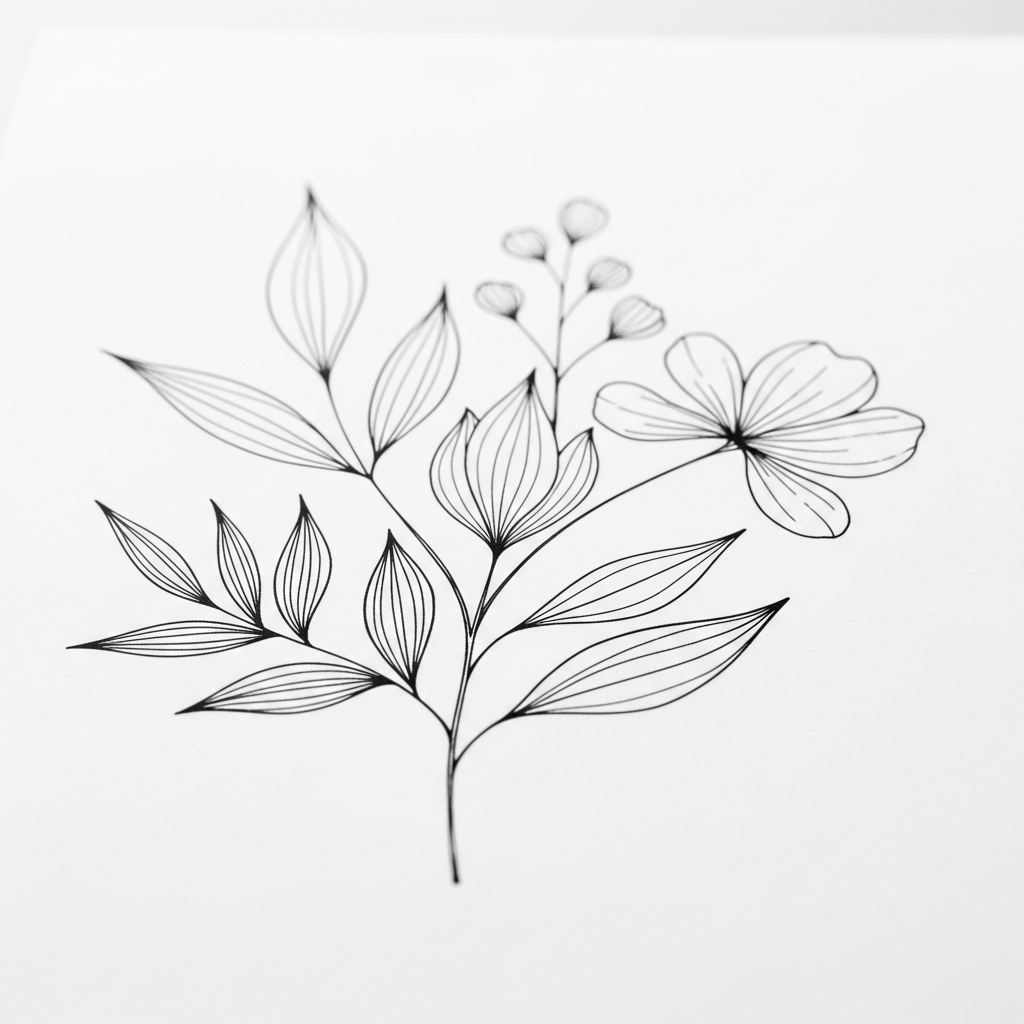
1. Minimalist Botanical Line Art
Smooth, flowing shapes of leaves and flowers are relaxing to draw and beautiful to display. They’re perfect for tattoo ideas, wall prints, or stationery designs. For inspiration, explore botanical illustration ideas for artists. Try drawing from real plants to understand organic curves and symmetry.
2. Geometric and Abstract Designs
Triangles, spirals, waves, and grids create bold, modern effects. You can also mix geometry with organic lines for a more dynamic feel. Learn about composition and visual balance through abstract art composition techniques.
3. Continuous One-Line Drawings
Once you’re comfortable, challenge yourself with portraits and figures drawn in one unbroken stroke—a style popularized by Picasso. It sharpens hand-eye coordination and trains you to simplify forms into expressive gestures.
4. Contour and Gesture Line Art
Contour drawings focus on the outlines of an object, while gesture drawings capture motion and emotion. These are great exercises for improving observation and drawing confidence.
Tips for Improving Line Art
- Rotate your paper or canvas: Draw from comfortable angles for smoother lines.
- Use references: Observe real-life shapes or photos for accuracy.
- Be patient: Skill develops with repetition and observation.
- Try tracing for practice: Understand proportions and rhythm by tracing references.
- Simplify: Focus on confidence and clarity—less is often more.
- Mind your breathing: Slow, steady breathing helps steady your hand while drawing.
- Keep experimenting: Mix techniques from different art styles.
Enhance your routine with daily drawing practice tips for steady progress and artistic growth.
Transitioning to Digital Line Art
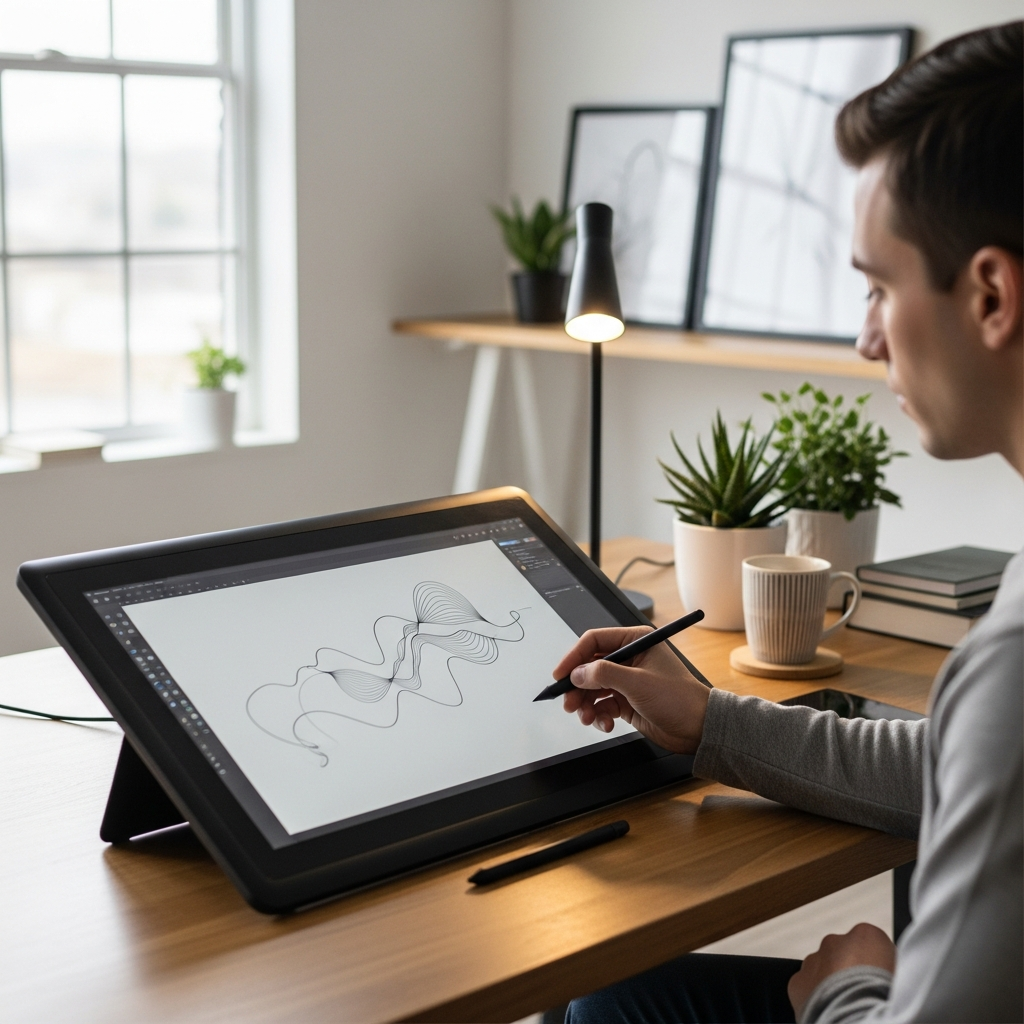
Digital line art provides precision, layering, and flexibility. Beginners can experiment with brushes, pressure sensitivity, and symmetry tools. Start with simple outlines before exploring advanced features like vector smoothing or textured brushes.
Recommended tools:
- Software: Procreate, Krita, Adobe Fresco
- Hardware: XP-Pen Deco, Wacom Intuos
Digital drawing lets you experiment without fear of mistakes—just undo and try again! You can even create time-lapse videos of your process to share with others online. Master digital control with Adobe’s guide to digital line art illustration.
Fun Practice Exercises & Projects: Easy Line Art
| Exercise | Goal | Materials |
| One-line animal drawing | Hand control & imagination | Pen + paper |
| Continuous portrait | Confidence & flow | Tablet or sketchbook |
| Botanical motifs | Composition balance | Fineliner pen |
| Digital remix | Blend traditional sketch with digital color | Tablet + stylus |
| Line pattern mandala | Relaxation & symmetry | Pen + compass |
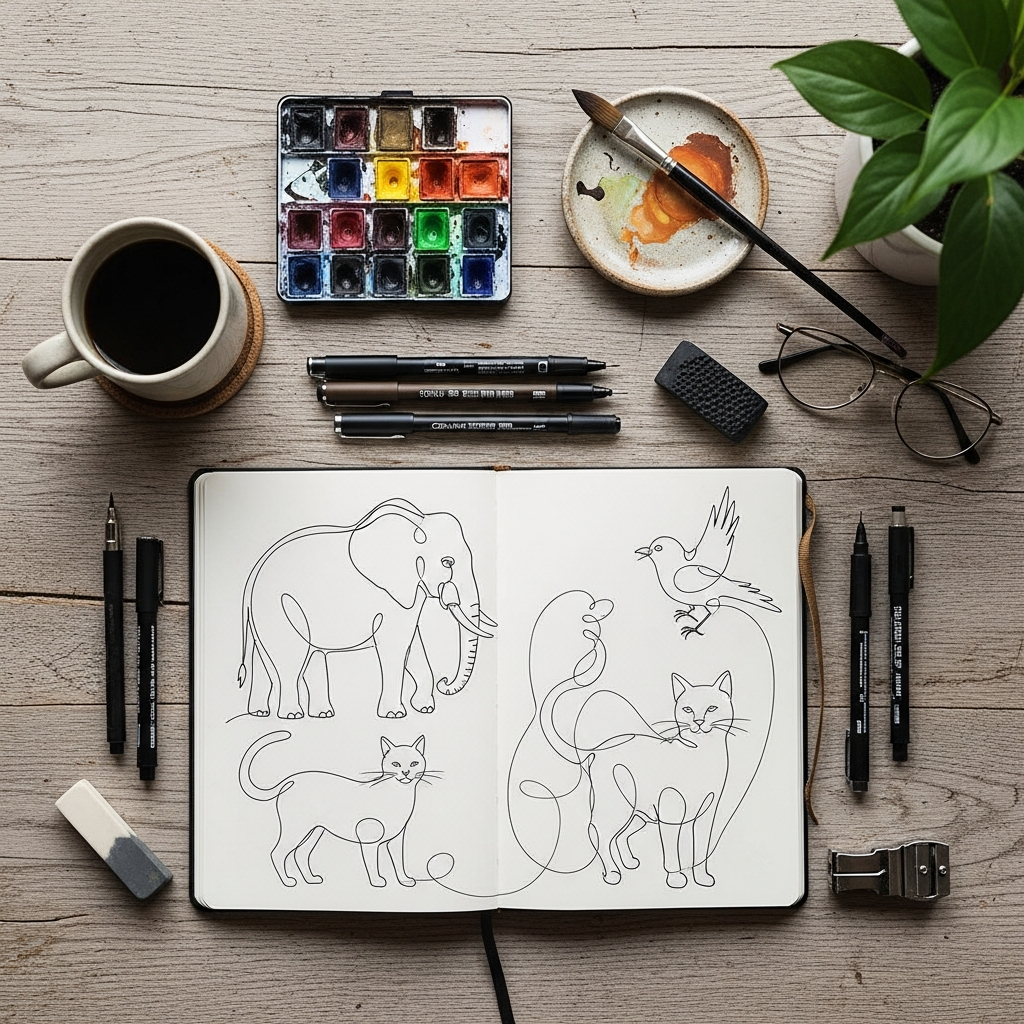
Need more structure? Explore line drawing exercises from Student Art Guide and share your artwork in Reddit’s LearnArt forum. Sharing your work builds confidence and helps you learn from other artists.
FAQs About Easy to Draw Line Art
Q1. What is the easiest type of line art to start with?
Start with continuous one-line drawings of simple shapes like fruits or faces.
Q2. What tools are best for beginners?
Fine liner pens or a basic drawing tablet. See our beginner drawing tools guide.
Q3. Can I create line art on my phone or tablet?
Yes, using apps like Procreate Pocket or Adobe Fresco.
Q4. How do I make my line art smoother?
Practice slow, confident strokes and adjust your brush settings for stabilization.
Q5. What is minimalist line art used for?
It’s often used in home decor, tattoo designs, and digital prints. Discover more in minimalist art inspiration.
Final Thoughts: Keep Practicing Easy to Draw Line Art
Your artistic journey doesn’t end. It stops when you quit making work.
Line art isn’t a gateway – it’s structural training. Each stroke either builds authority or reinforces weakness. Consistency doesn’t make sketches “expressive.” It makes them honest. Your hand stops apologizing.
Don’t post for inspiration. Post for accountability. Document because galleries demand digital presence before they’ll see your actual work.
Keep drawing because the work compounds. Your hand remembers what your brain forgets. Every artist you admire made thousands of drawings nobody saw.
The community doesn’t need techniques. It needs honesty about how hard this is.
Now work.
Join the community by sharing your artwork or tips in the comments below, and explore more creative challenges like negative space drawing ideas and daily sketch prompts to stay inspired.