Have you ever looked at a painting and instantly known who created it? Maybe you recognized Van Gogh’s swirling brushstrokes or Picasso’s geometric faces before even seeing the signature. That’s the magic of a unique art style, and here’s the exciting news: developing your unique art style isn’t about following a secret formula – it’s about discovering what makes your creative heart sing. Whether you’re just starting to explore painting or you’ve been creating for years, finding your artistic voice is one of the most rewarding adventures you’ll ever embark on.
Key Takeaways
- Art style develops naturally through consistent practice and experimentation, not overnight
- Famous artists evolved their styles throughout their careers, often making dramatic changes
- Your unique style emerges from your personal choices, preferences, and experiences
- Studying other artists helps inform your work without copying them directly
- Creative authenticity comes from following your passions and embracing imperfections
What Exactly Is an Art Style (And Why Should You Care)?
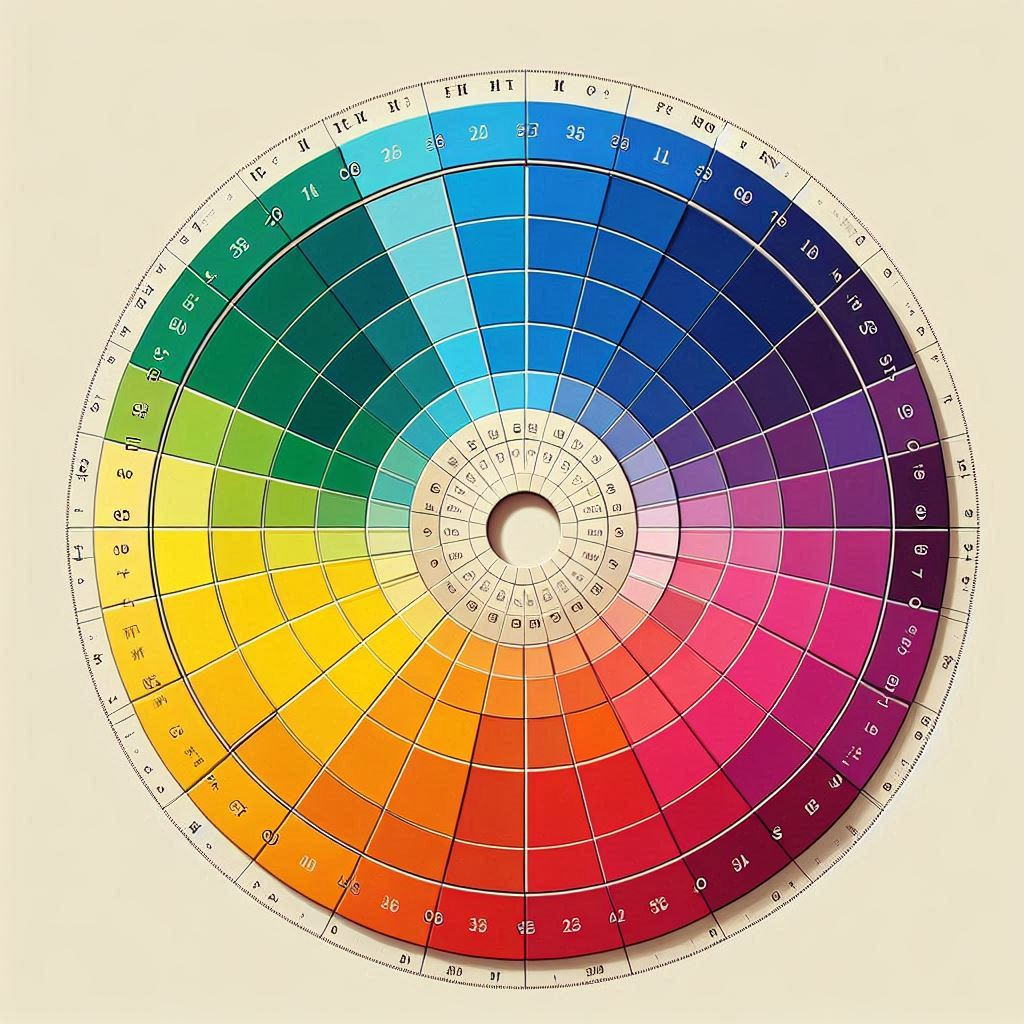
Let’s start with the basics. Your art style is like your creative fingerprint—it’s the collection of choices you make that makes your work recognizable as yours. It includes everything from the colors you gravitate toward, the subjects you love painting, the techniques you use, to how you compose your pieces.
But here’s something important: your style isn’t something you pick from a menu. You don’t just wake up one day and decide, “I’m going to be a Cubist!” Instead, your style develops organically as you create, experiment, and discover what feels right to you. Think of it as a natural byproduct of making art consistently, rather than a destination you force yourself to reach.
An art style is different from an art movement, too. A movement like Impressionism or Abstract Expressionism involves many artists working with similar ideas during a specific time period. Your personal style? That’s all about you and your unique perspective.
Learning from the Masters: How Famous Artists Found Their Styles
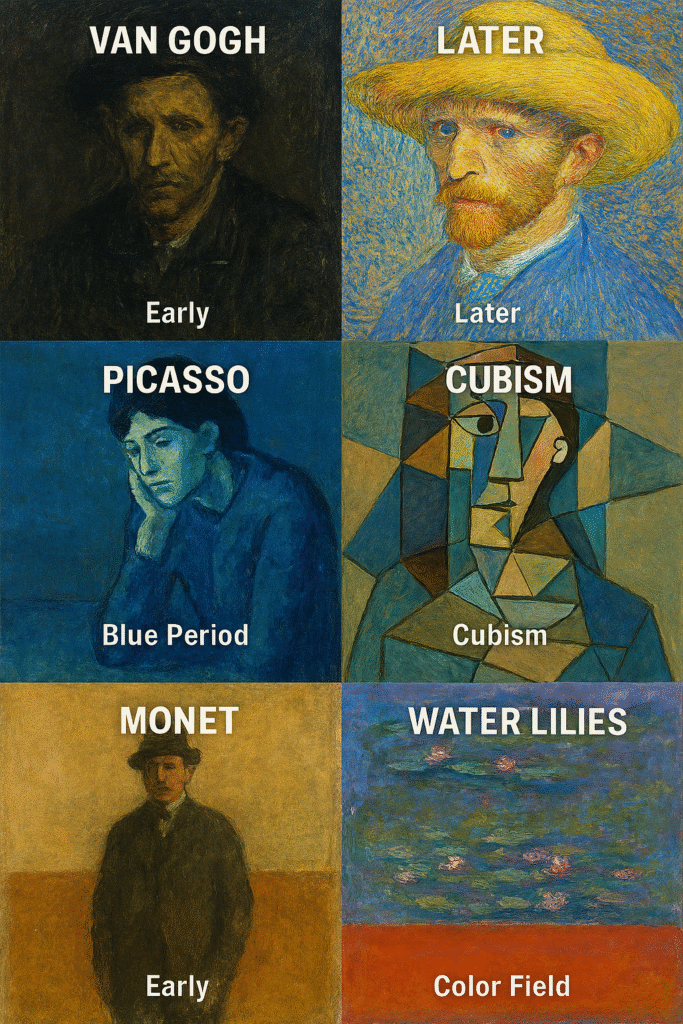
Vincent van Gogh: From Dark to Dazzling
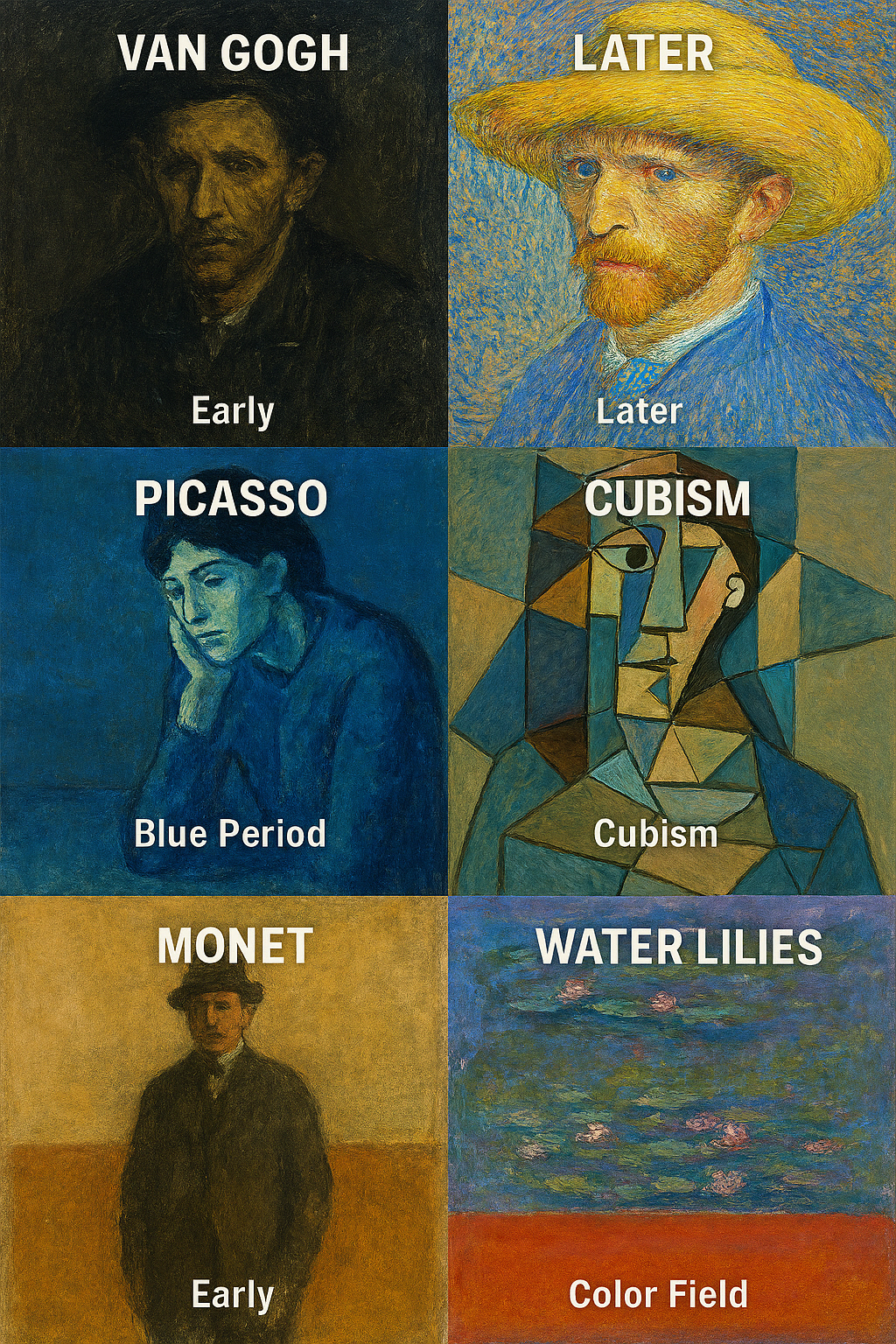
Van Gogh didn’t start out painting those famous swirling skies and vibrant sunflowers. His early work was actually quite dark and somber, filled with earth tones and heavy subjects. But after moving to Paris and seeing the work of Impressionist painters, his palette exploded with color. He experimented relentlessly, eventually developing those thick, expressive brushstrokes we recognize instantly today.
The lesson? Your style can transform completely as you grow and experience new things.
Pablo Picasso: The Ultimate Style Chameleon
Picasso proves that artists don’t have to stick with one style forever. He moved from his melancholy Blue Period through the geometric revolution of Cubism and beyond. Each phase reflected his personal growth, interests, and the artistic questions he was asking at that moment.
“Every act of creation is first an act of destruction.”
Pablo Picasso
Claude Monet: Obsessed and Original
Monet’s distinctive style emerged from his obsession with capturing light and atmosphere. He painted the same subjects – his water lilies, haystacks, and Rouen Cathedral – over and over under different lighting conditions. This repetition wasn’t boring; it helped him develop his signature approach to color and brushwork.
Mark Rothko: Finding Power in Simplicity
Rothko started with figurative painting but eventually stripped everything away to create his famous color field paintings – those large canvases with floating rectangles of color. He found his voice by eliminating what didn’t matter and focusing intensely on emotional impact through color alone.
Practical Steps for Developing Your Unique Art Style
1. Create Consistently (Yes, Even When You Don’t Feel Inspired)
The most important thing you can do is make art regularly. Your style emerges through repetition and muscle memory. When you paint frequently, certain patterns naturally appear – maybe you always blend colors a particular way, or you’re drawn to specific subjects.
Set a realistic schedule, even if it’s just sketching for 15 minutes daily. The more you create, the more data points you give yourself about what feels authentic to you.
2. Study Artists You Admire (The Right Way)
It’s absolutely okay, even beneficial, to study other artists! But there’s a right way and a wrong way to do it.
Wrong way: Copying their work exactly and calling it yours.
Right way: Analyzing why their work moves you. Ask yourself:
- What specific colors attract me to this piece?
- How does the composition guide my eye?
- What techniques create this texture or effect?
- What emotions does this artwork evoke, and how?
For example, if you love Impressionist paintings, you might appreciate how they capture light with broken color. You can incorporate this principle into your own work without painting water lilies in Monet’s exact style.
3. Experiment Without Fear
| Medium | Why Try It | Style Insight |
|---|---|---|
| Watercolors | Forces spontaneity and looseness | Teaches you to embrace unpredictability |
| Acrylics | Versatile and forgiving | Helps you experiment with texture and layering |
| Oil paints | Slow drying allows blending | Develops patience and refinement |
| Mixed media | Combines multiple materials | Expands creative possibilities |
Try different painting mediums, experiment with unusual color combinations, test various brushwork techniques. Some experiments will fail spectacularly, and that’s perfect! Those “failures” teach you what doesn’t resonate with you, which is just as valuable as discovering what does.
4. Welcome Happy Accidents
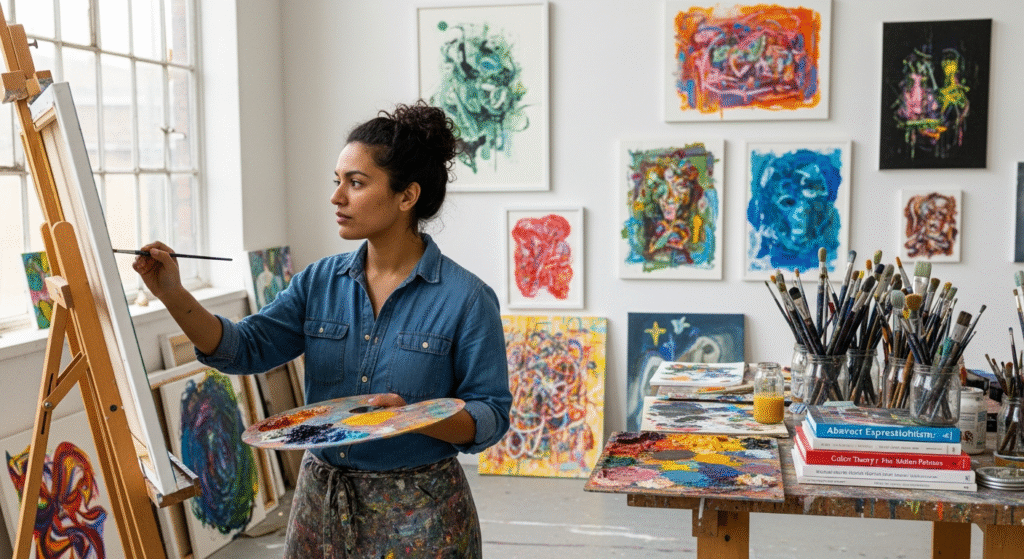
Some of the most distinctive artistic techniques were discovered by accident. Jackson Pollock’s drip paintings emerged partly from experimentation that went in unexpected directions. Abstract art often celebrates the unplanned.
When paint drips where you didn’t intend, or colors blend in surprising ways, don’t automatically fix it. Ask yourself: “Do I actually like this?” Sometimes serendipity knows better than your original plan.
5. Reflect on Your Body of Work
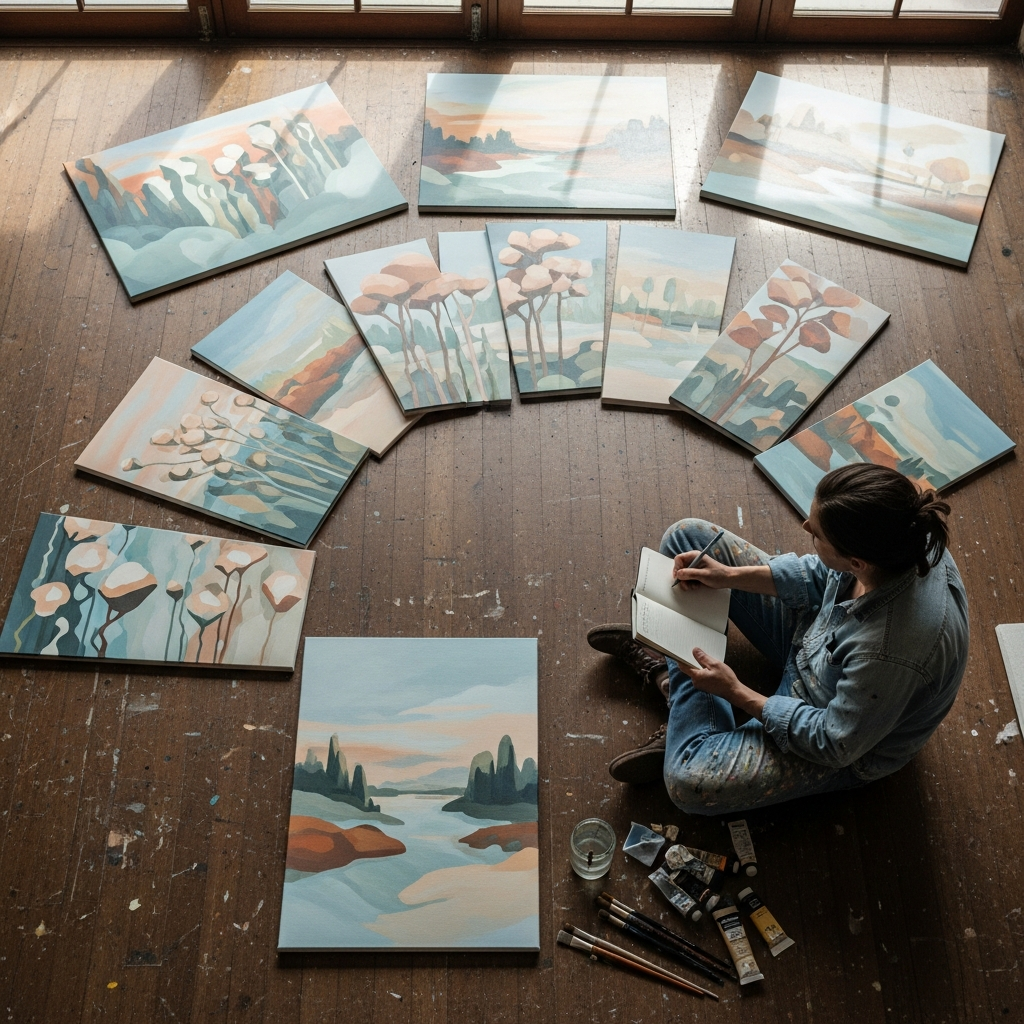
Every few months, lay out your recent paintings and look for patterns:
- Do certain colors appear repeatedly?
- Are you drawn to particular subjects or themes?
- Do you prefer loose, expressive marks or tight, controlled details?
- What textures or techniques show up most often?
These recurring elements are clues to your emerging style. According to research on artistic development, self-reflection is crucial for developing artistic identity.
6. Follow Your Genuine Interests
Paint what genuinely excites you, not what you think will sell or impress others. If you’re obsessed with painting your cat in different poses, embrace that! If you can’t stop thinking about stormy seascapes or bustling city streets, that’s your creative compass pointing you in the right direction.
Your authentic interests naturally lead to authentic style. Georgia O’Keeffe became famous for her flower paintings partly because she was genuinely fascinated by their forms and details.
How to Develop Your Unique Art Style Without Getting Stuck
Don’t Rush the Process
One of the biggest mistakes aspiring artists make is trying to force a style too quickly. Style development is a journey, not a race. Most professional artists took years to develop their recognizable approach. Give yourself permission to be in the exploration phase without pressure to arrive at some final destination immediately.
Avoid the Comparison Trap
Social media makes it easy to compare your day-one attempts with someone else’s years of practice. Remember: those artists whose work you admire also started as beginners. Focus on your own progress, not someone else’s highlight reel.
Understand That Evolution Is Natural
Your style today doesn’t have to be your style forever. As you gain new painting skills, encounter different life experiences, and your interests shift, your artistic voice will naturally evolve. That’s not failure – that’s growth.
Finding Your Artistic Voice: The Secret Ingredient
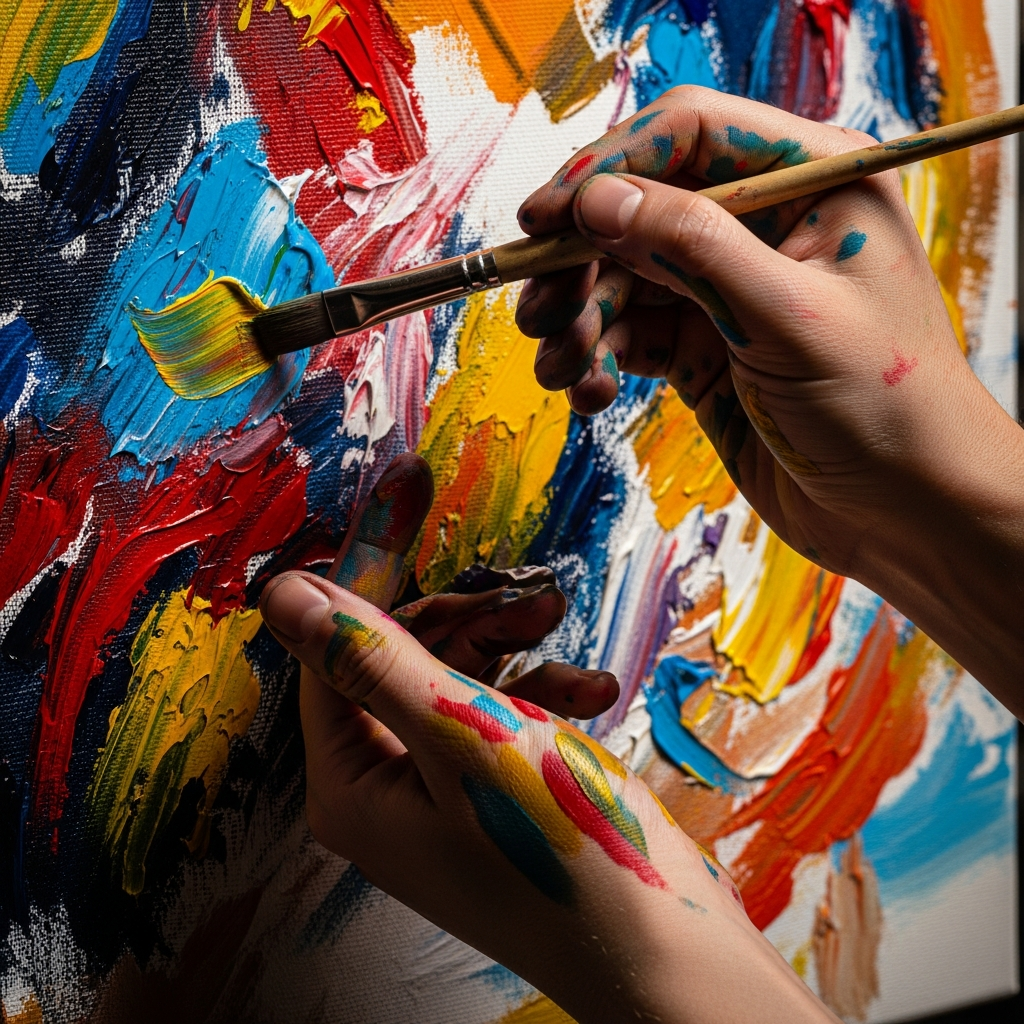
While technique and practice are crucial for developing your unique art style, your artistic “voice” comes from something deeper: your personal perspective. Your experiences, values, emotions, and the unique way you see the world – these intangible elements make your work truly distinctive.
Two artists can use identical techniques and materials but create completely different work because their inner voices differ. Your voice emerges when you:
- Paint subjects that genuinely matter to you
- Express emotions honestly through your work
- Let your personal experiences inform your artistic choices
- Create from authenticity rather than trends
Understanding Your “Why” as an Artist
Why do you create art? Your answer influences your style development:
- Hobbyist: You might feel freer to experiment wildly without commercial pressure
- Professional artist: You may balance personal expression with market considerations
- Art educator: Your style might emphasize clear technique demonstration
- License-seeking artist: You might develop commercially appealing but distinctive work
None of these purposes is better than others, but understanding your “why” helps you make style decisions that align with your goals. The Artist’s Way by Julia Cameron offers excellent guidance on connecting with your creative purpose.
Frequently Asked Questions
How do artists find their unique style?
Artists find their unique style through consistent practice, experimentation, and reflection over time. It’s not a conscious decision but rather emerges naturally as you repeatedly make artistic choices that feel authentic to you. Most artists develop their signature style by creating regularly, studying work they admire, trying different techniques and mediums, and identifying patterns in their own preferences.
Is it okay to copy art styles?
Copying art styles for learning purposes is acceptable and common in art education – many master artists learned by copying works they admired. However, directly copying another artist’s style and presenting that work as originally yours is not ethical. Instead, analyze what you like about various styles and incorporate elements that resonate with you into your own unique approach. The goal is inspiration, not imitation.
What is the best way to develop an art style?
The best way to develop an art style is through prolific creation combined with thoughtful reflection. Paint or draw regularly, experiment with different mediums and techniques, study artists you admire, and periodically review your work to identify recurring themes and preferences. Allow your style to emerge organically rather than forcing it, and remember that evolution is natural and healthy for artistic growth.
Why do some artists change their style?
Artists change their styles for many reasons: personal growth, new interests, technical discoveries, life experiences, or simply boredom with their current approach. Famous examples include Picasso’s movement from his Blue Period to Cubism, and Pollock’s shift to abstract expressionism. Style changes often reflect an artist’s evolving questions, skills, and perspective, and should be embraced as part of creative development rather than viewed as inconsistency.
What defines an artistic style?
An artistic style is defined by consistent choices an artist makes regarding color palette, subject matter, composition, technique, brushwork, texture, and overall approach to creating. It encompasses both technical elements (how you apply paint, what tools you use) and conceptual elements (what themes you explore, what emotions you convey). Style is your artistic fingerprint – the combination of choices that makes your work recognizably yours.
Your Style Journey Starts Now
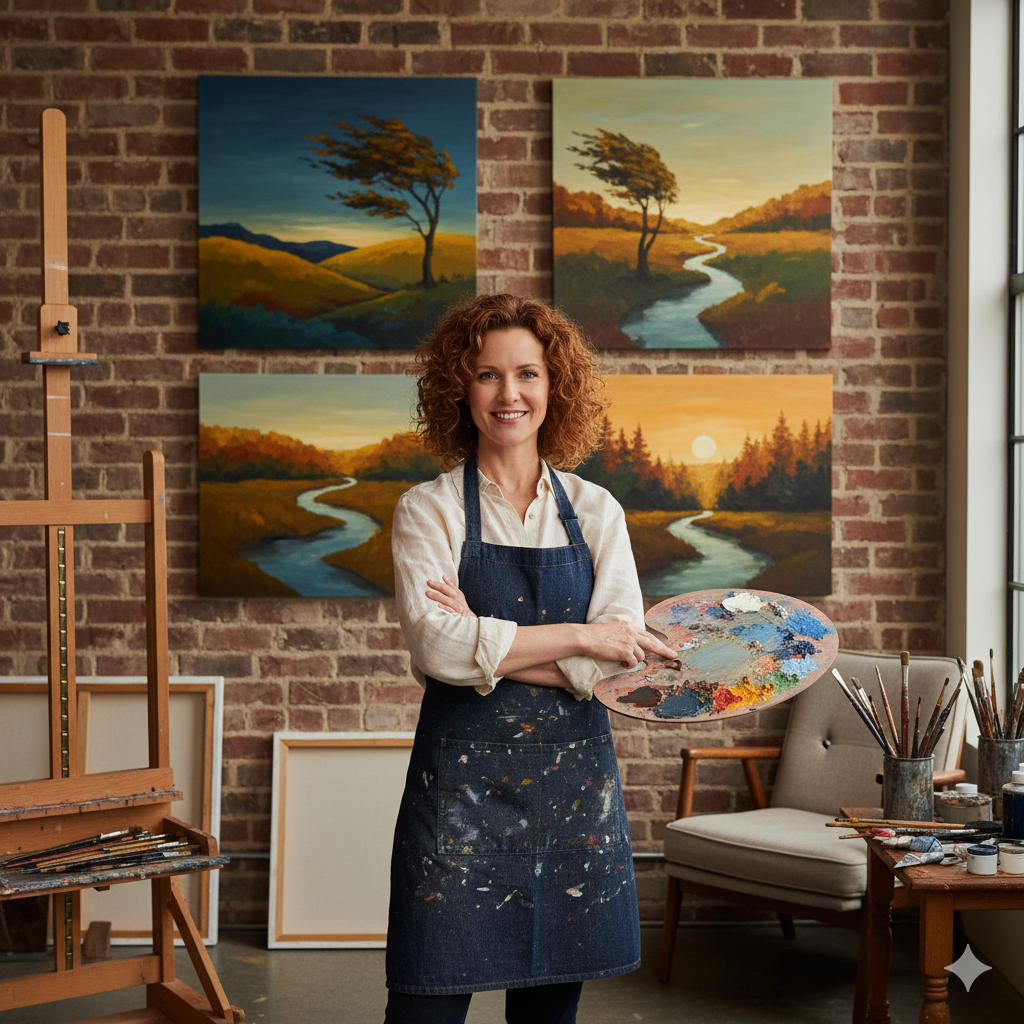
Developing your unique art style isn’t about discovering some hidden secret or following a rigid formula. It’s about showing up consistently, experimenting fearlessly, studying thoughtfully, and most importantly, creating authentically. Your style is already within you, waiting to emerge through the accumulated choices you make across hundreds or thousands of artworks.
Remember the lessons from the masters: Van Gogh transformed his entire approach, Picasso reinvented himself multiple times, Monet found power in repetition, and Rothko discovered his voice by stripping everything down to essentials. Your journey will be different from all of theirs—and that’s exactly the point.
Start where you are, use what you have, paint what you love, and trust the process. Your unique artistic voice is developing right now, with every brushstroke. Now pick up that brush and create something only you can make!
Additional Resources
- Artists Network – Finding Your Artistic Style – Comprehensive articles and tutorials on style development
- The Artist’s Way by Julia Cameron – Classic guide to unlocking creative potential and finding your artistic voice
- Frontiers in Psychology: Artistic Development Research – Academic research on how artists develop their unique identities
- Georgia O’Keeffe Museum – Explore how one master artist developed and maintained her distinctive style
- Tate Museum Artist Profiles – Study the style evolution of renowned artists throughout history
- Skillshare – Art Style Development Classes – Online courses focused on finding and refining your artistic voice