
Stop looking at a sketchbook and waiting for a divine spark. Drawing is not magic. It is discipline . It is the grit required to force your hand to obey your eye . You aren’t “born with it.” You build it. Like layers of heavy-body paint, you construct the skill through repetition and structural control . Forget the notion that art is passive or that talent is accidental. It requires will . But you have to understand the anatomy of a line before you can fracture the perspective . We start here on a guided How to Draw Easy Subjects. With the structure.
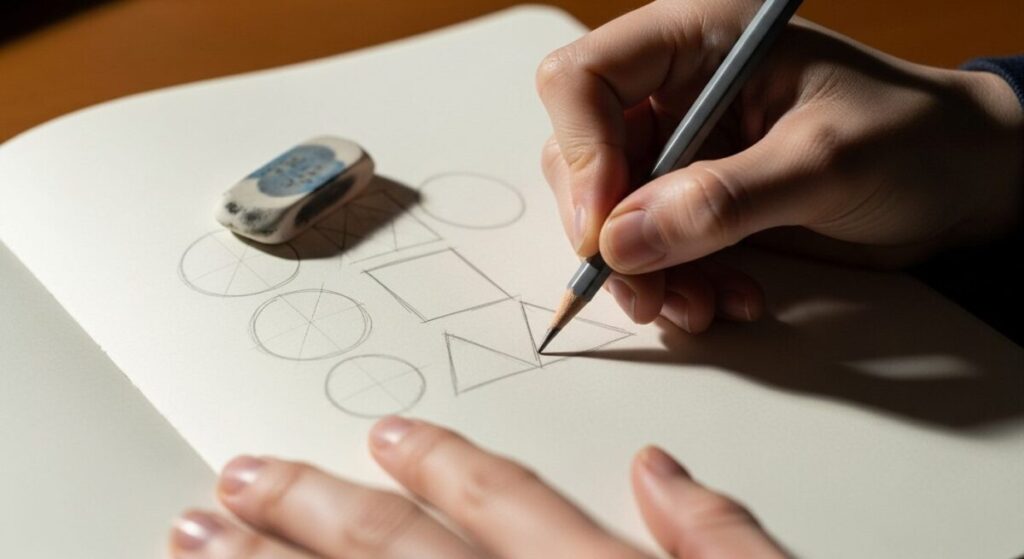
The biggest hurdle for most beginners is simply getting started. We look at complex subjects and feel overwhelmed. We think we have to draw a perfect replica of a person or a landscape on our first try. This post is here to change that mindset. We’re going to show you that the most difficult subjects can be broken down into the simplest of shapes.
This guide is designed for the absolute beginner—the person who swears they can’t even draw a straight line. We will walk you through a simple, step-by-step process to draw three classic, easy subjects: a simple animal, a basic flower, and a charming cartoon character. Forget the fear, grab a pencil and paper, and let’s begin your artistic journey.
The Core Philosophy: See in Shapes
Before we draw a single line, let’s talk about the most important concept you’ll learn today. Every single object in the world—from a car to a cat to a coffee cup—is just a collection of basic geometric shapes.
- A head is a circle.
- A body is a cylinder or an oval.
- An arm is a series of smaller cylinders.
- A window is a rectangle.
By learning to see these underlying shapes, you can build your drawing piece by piece, from the inside out. Your first lines should be light, simple shapes. Don’t press hard with your pencil. These are just “guidelines” that will help you structure your drawing. Once you have the basic form, you can erase these initial lines and add the final details.
For this exercise, all you need is a pencil, a piece of paper, and an eraser. Nothing fancy is required.
Section 1: How to Draw a Simple Animal (A Friendly Bear)
A bear might sound intimidating, but it’s one of the easiest animals to draw because its shape is so round and forgiving. We’ll draw a cute, friendly teddy bear-like character that’s perfect for beginners.
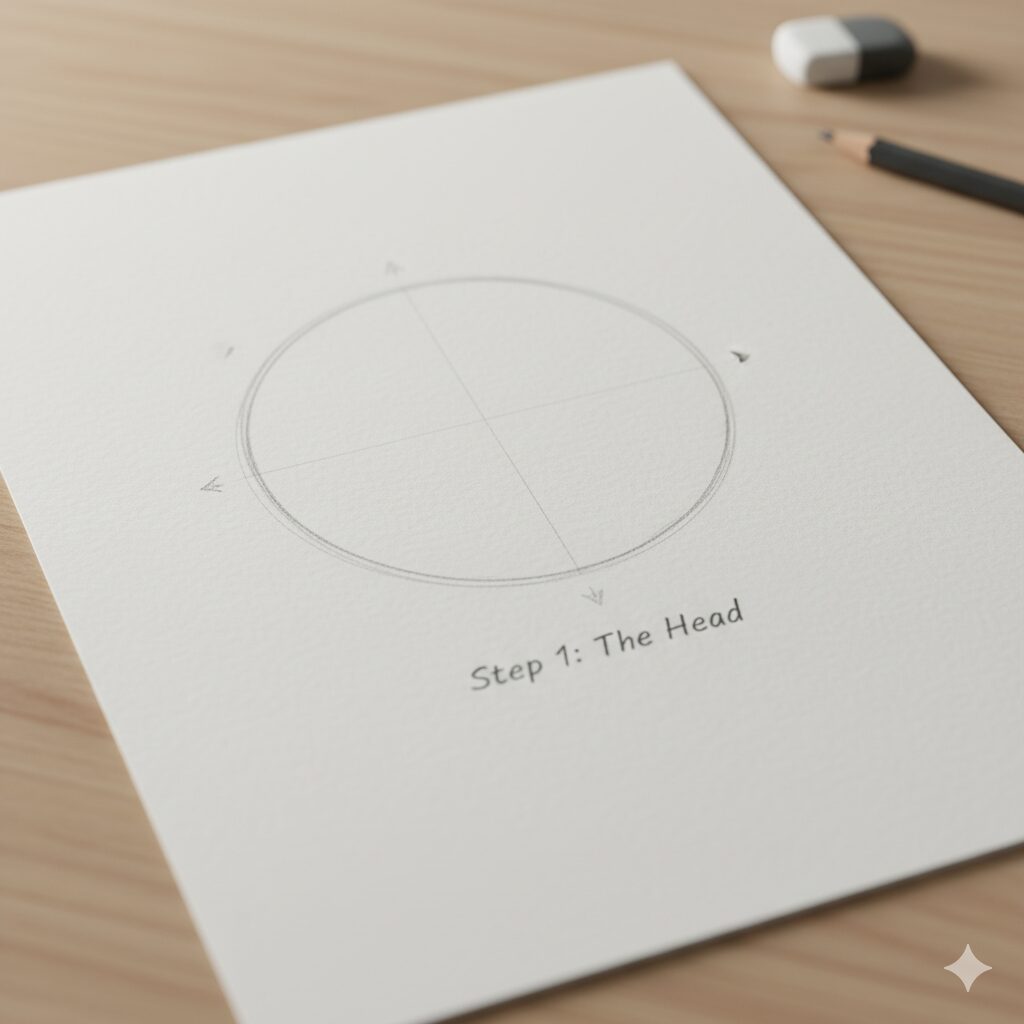
Step 1: The Head
Start with a large, slightly squashed circle in the middle of your page. This will be the bear’s head. Remember to draw this lightly—it’s just a placeholder.
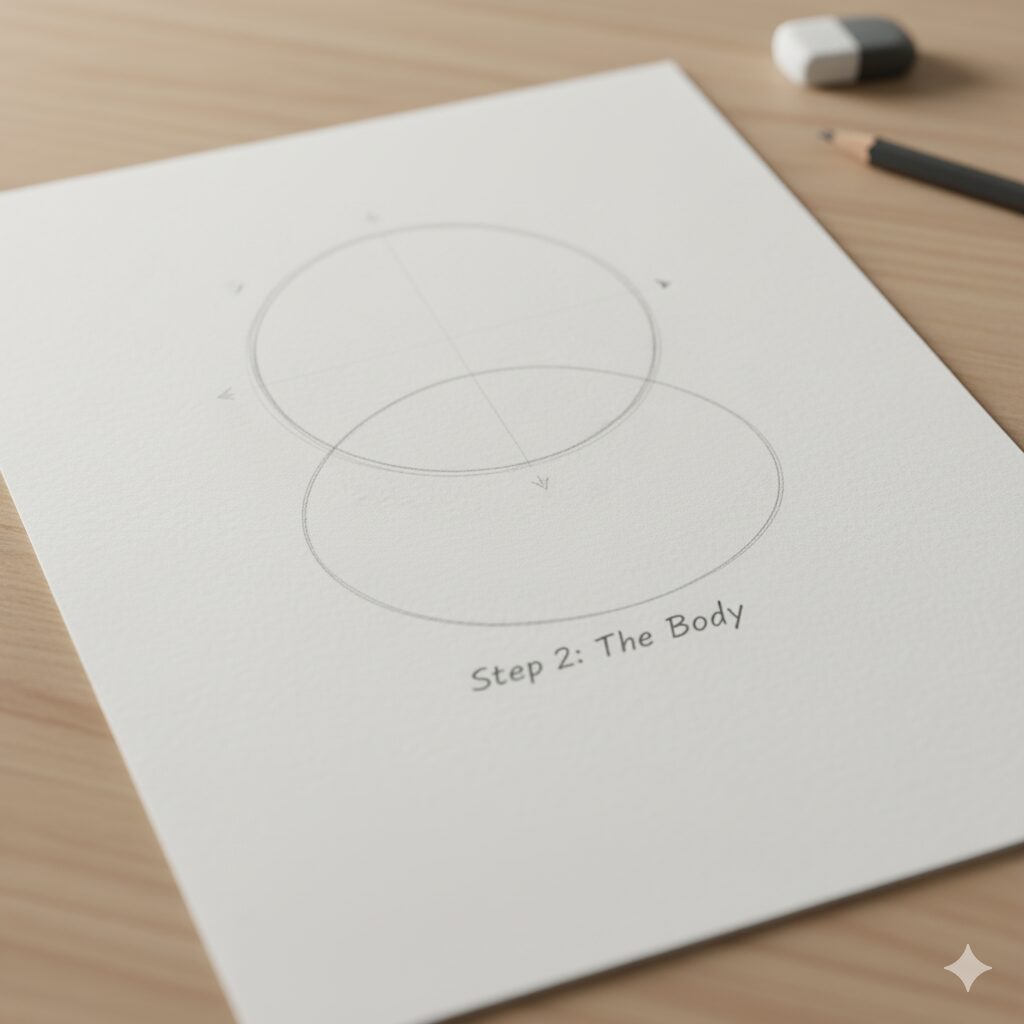
Step 2: The Body
Below the head, draw an even larger, slightly wider oval. This oval should overlap with the bottom of the head circle, creating the bear’s neck. This is the main body of our bear.
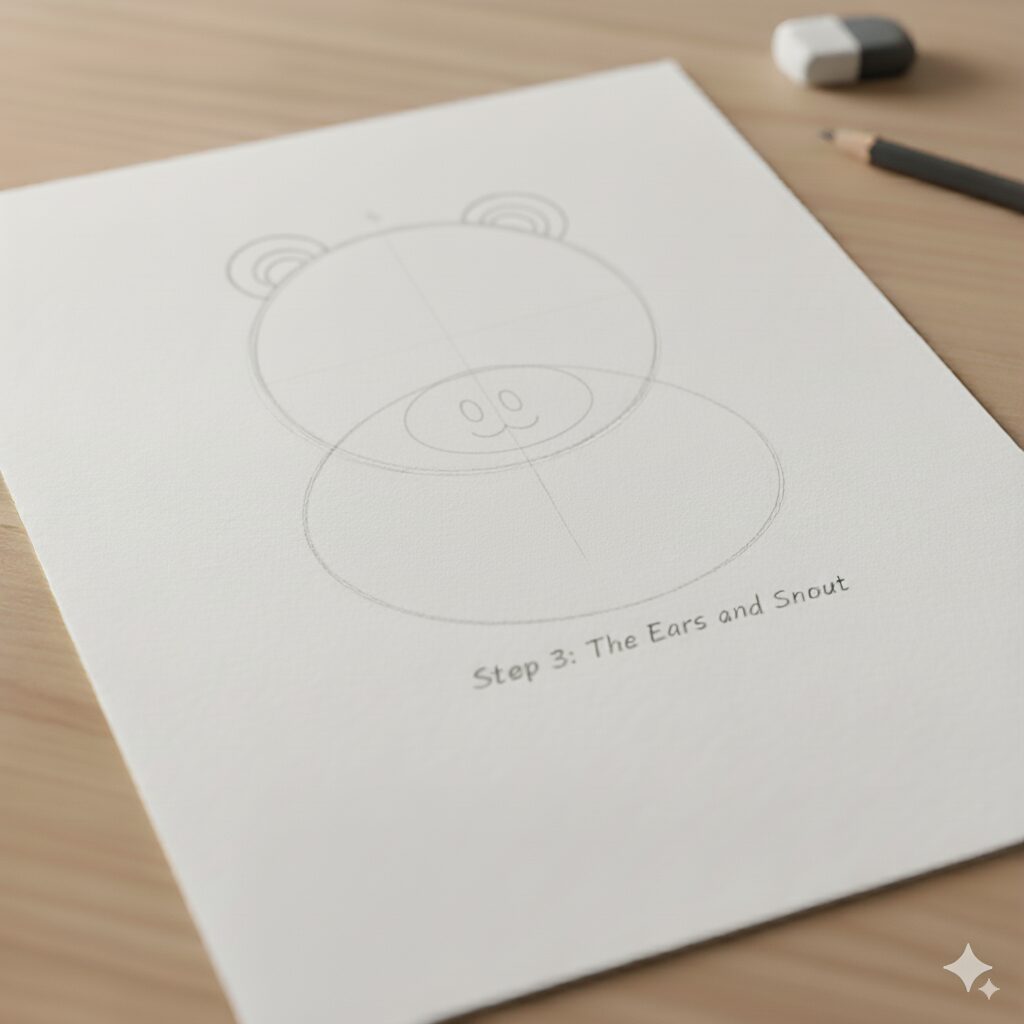
Step 3: The Ears and Snout
Now, let’s add the features to the head. On the top of the head circle, draw two smaller half-circles. These are the ears. Inside each ear, you can draw an even smaller half-circle to add a bit of detail. In the bottom center of the head, draw a small oval for the snout.
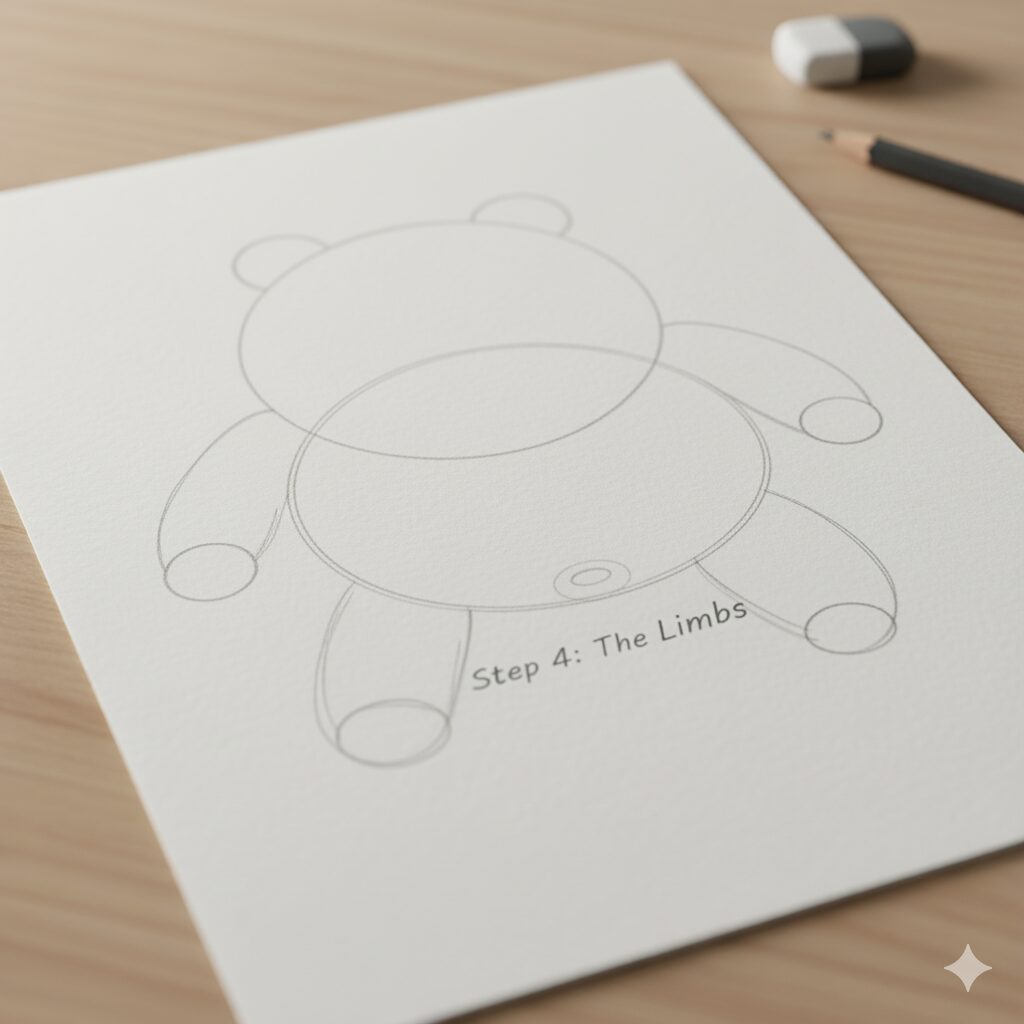
Step 4: The Limbs
Now for the arms and legs. For the arms, draw two ovals extending from the sides of the body oval. They can be slightly curved to suggest a relaxed posture. For the legs, draw two more ovals at the bottom of the body. You can add smaller circles at the ends of the limbs to create the paws.
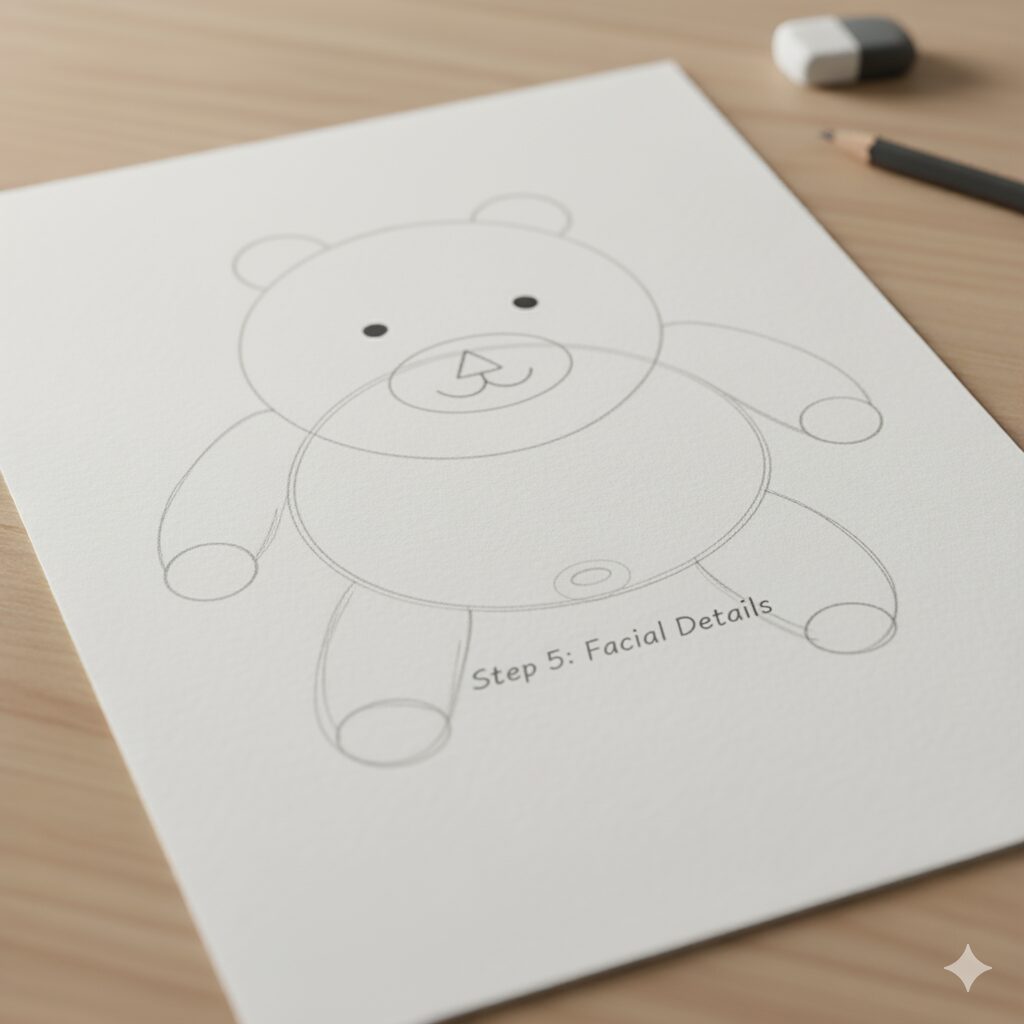
Step 5: Facial Details
Let’s bring our bear to life! Inside the snout oval, draw a small, upside-down triangle for the nose. Below the nose, draw a simple line for the mouth, curving it up into a smile. For the eyes, two simple dots will work perfectly. You can even add little circles inside the eyes for a cute, shiny look.
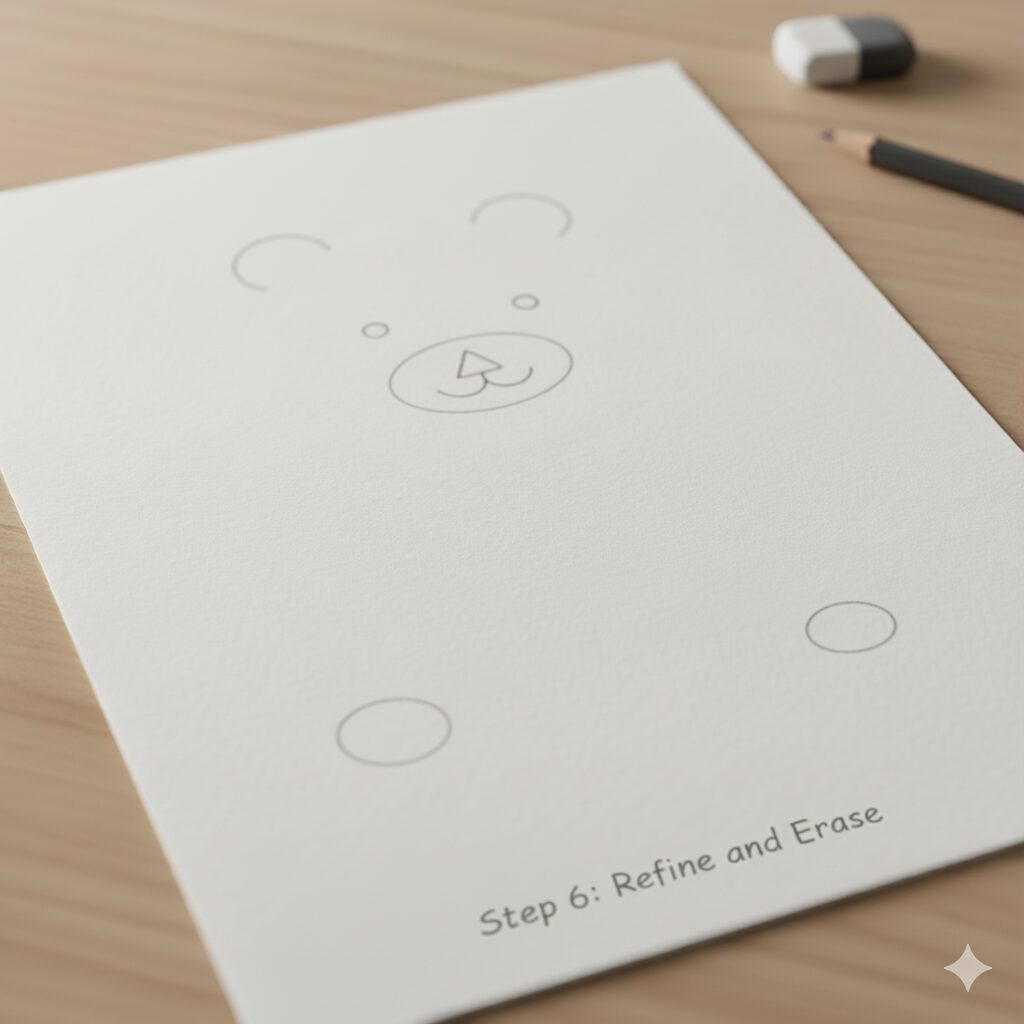
Step 6: Refine and Erase
Now, you can use your eraser to get rid of any overlapping guideline lines. Clean up the edges, and go over your final lines with a slightly firmer hand to make them stand out. You can add a few short, wispy lines around the body to suggest fur texture.
Congratulations! You’ve just drawn a bear. See how a complex subject was simply a series of circles and ovals? You can use this same approach to draw other animals like cats, dogs, or even elephants.
Section 2: How to Draw a Flower for Beginners (A Classic Daisy)
Flowers are a classic subject for artists, and the daisy is a perfect starting point. Its symmetrical shape and simple petals make it a very forgiving subject for beginners.

Step 1: The Center
Just like with the bear, we’ll start with a circle. In the middle of your paper, draw a small circle. This is the center of your daisy.
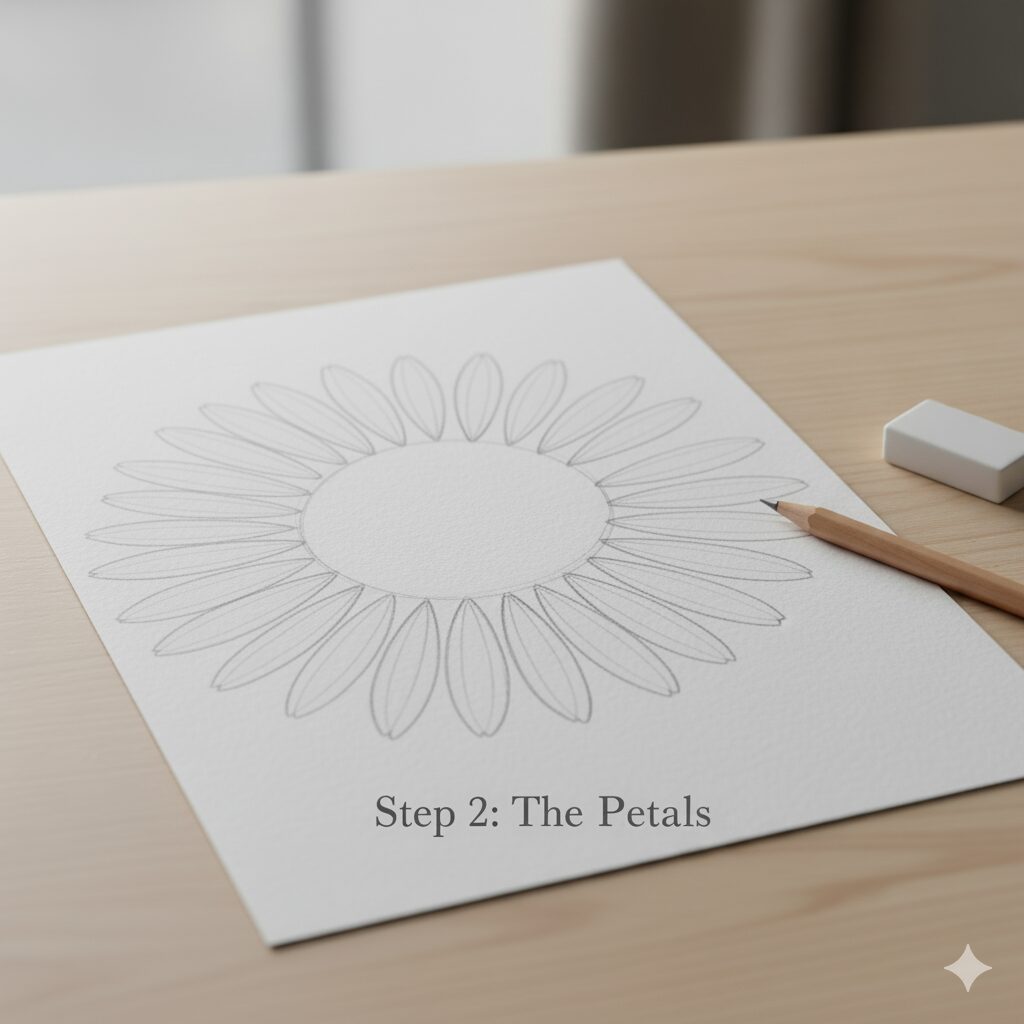
Step 2: The Petals
This is the most repetitive part, but also the most fun. From the edge of the center circle, draw a petal. A petal can be drawn as a long, rounded teardrop shape. Draw another one right next to it, and continue to draw petals all the way around the circle, like the spokes of a wheel. Don’t worry if they aren’t all the same size or shape—that’s what makes it look natural!
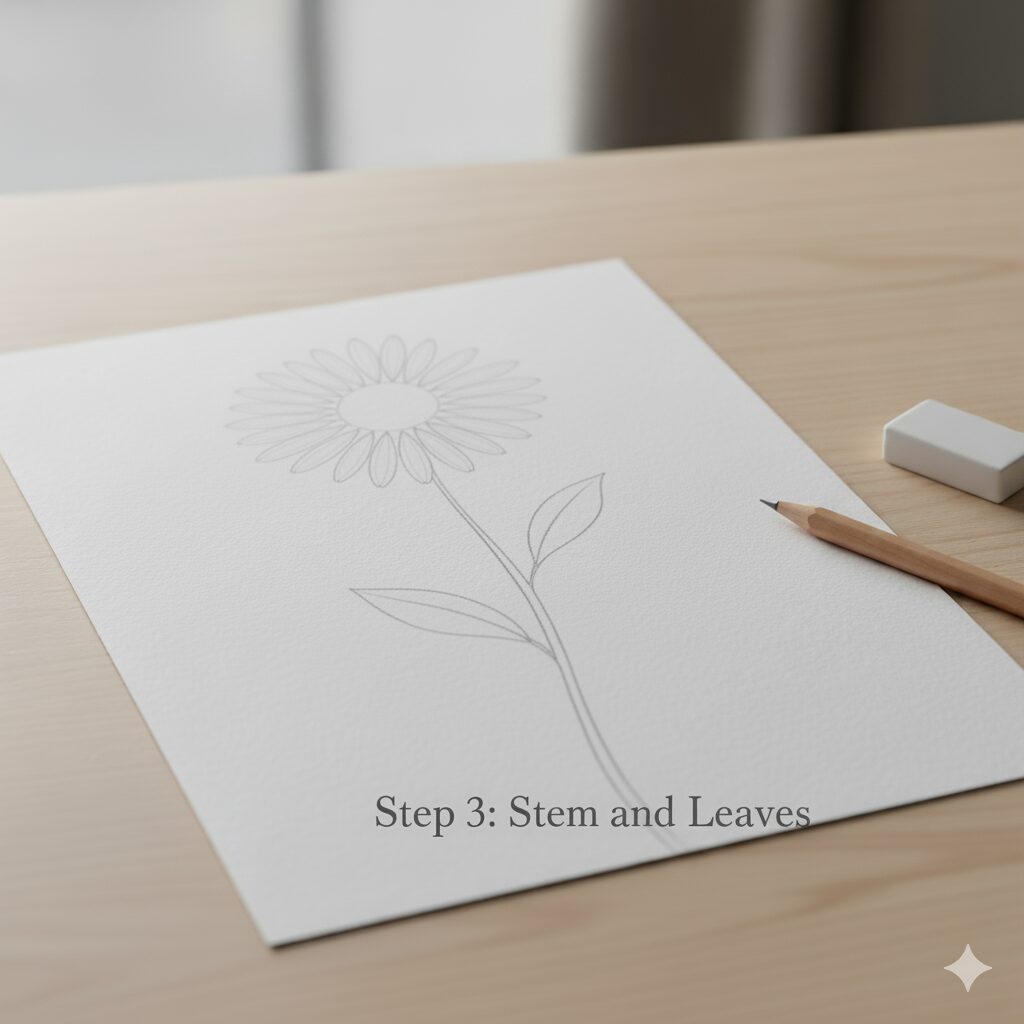
Step 3: The Stem and Leaves
Now, let’s give the flower a home. From the bottom of the center circle, draw two long, parallel lines extending downwards. This is the stem. You can curve it a little to make it look more dynamic. Along the stem, add a few simple, pointy-oval shapes for the leaves.
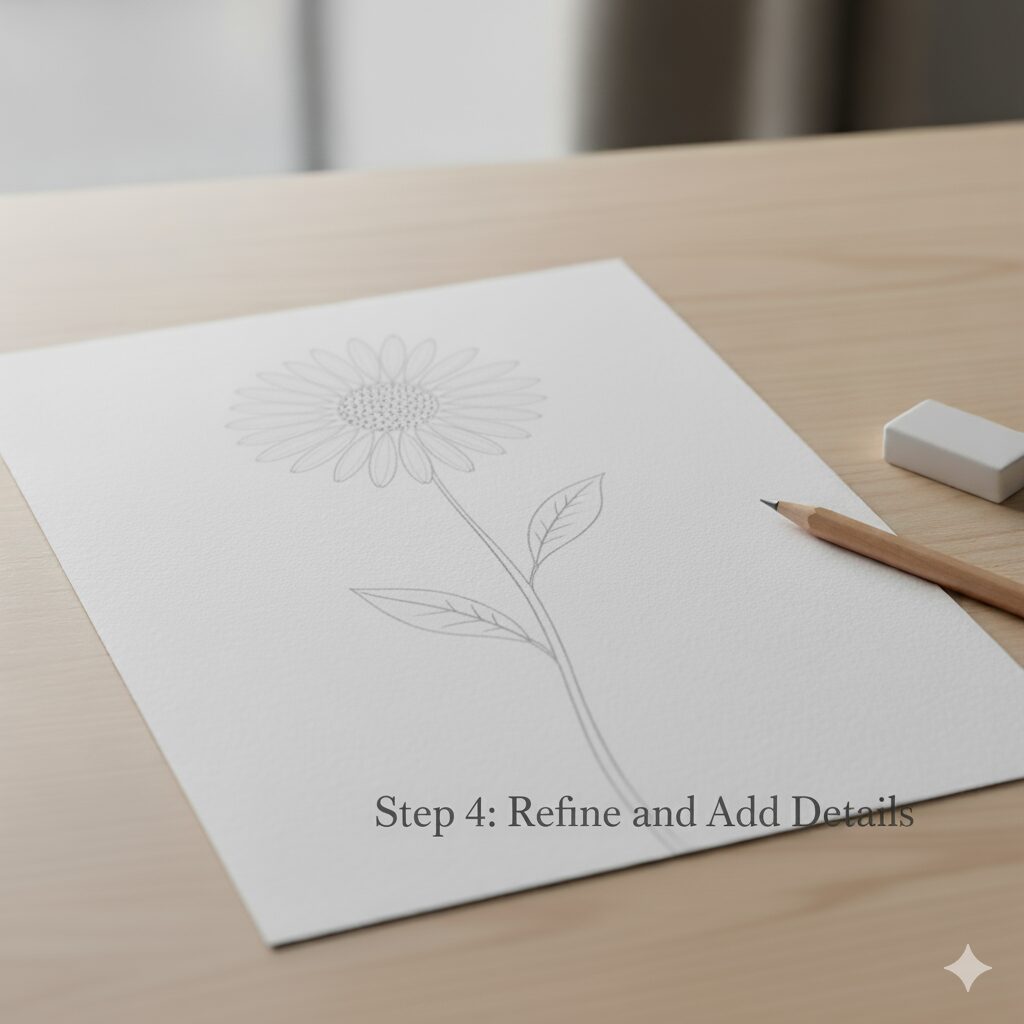
Step 4: Refine and Add Details
Now it’s time to clean it up. Erase the part of the stem that overlaps with the central circle. Inside the central circle, you can draw a few small dots or a spiral pattern to give it a nice texture. On the leaves, a single line down the center can act as a vein.
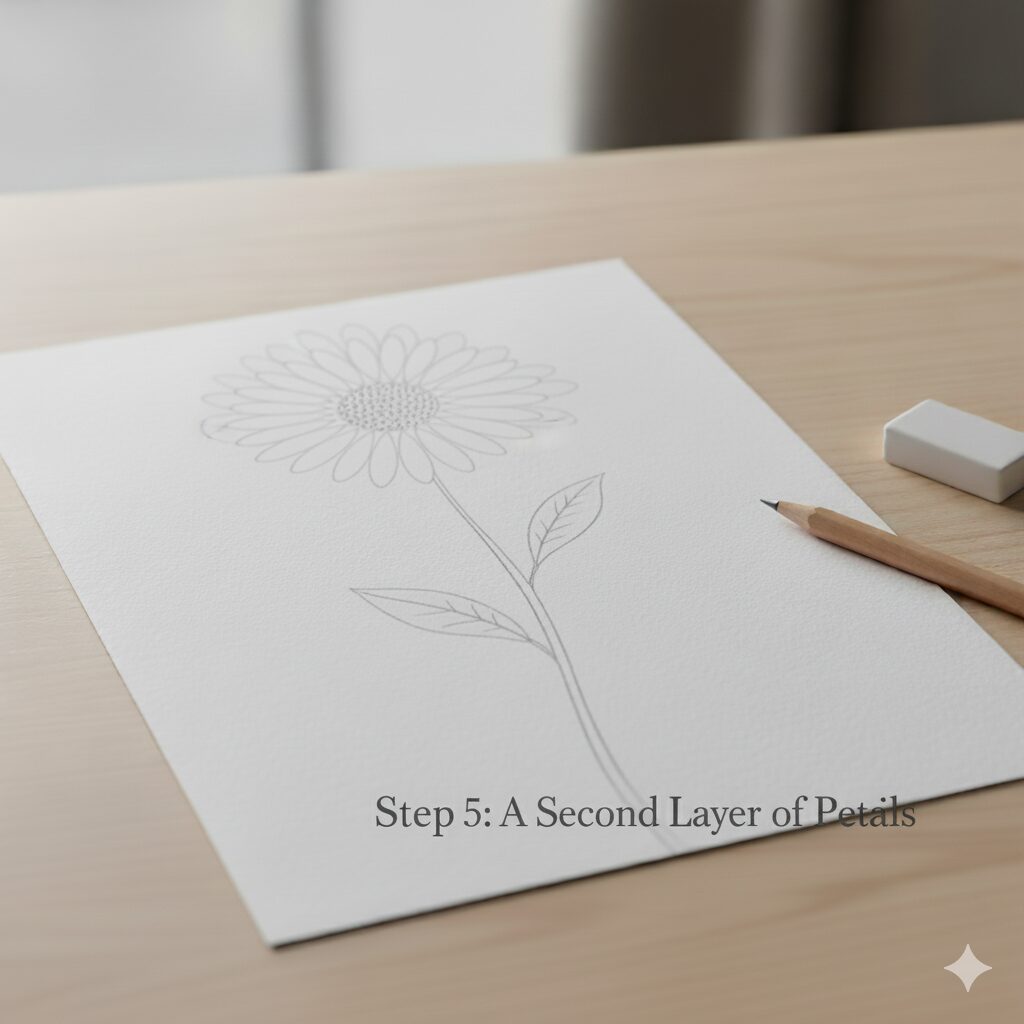
Step 5: A Second Layer of Petals
To make your flower look fuller and more three-dimensional, you can add a second layer of petals. Behind the first layer of petals you drew, add another layer. These petals will be partially hidden, peeking out from behind the front petals. They will help create a sense of depth.
You have now mastered the art of drawing a simple flower! The same principle of starting with a central shape and building out can be used for drawing other flowers, like tulips (start with a U-shape) or sunflowers (use a larger circle and triangular petals).
Section 3: How to Draw a Cartoon Character Step-by-Step
Drawing a cartoon character is about expressing an idea with as few lines as possible. Exaggeration is key here. A cartoon character doesn’t have to follow the rules of reality, which makes them incredibly fun and easy to draw. We’ll create a simple, happy blob character.
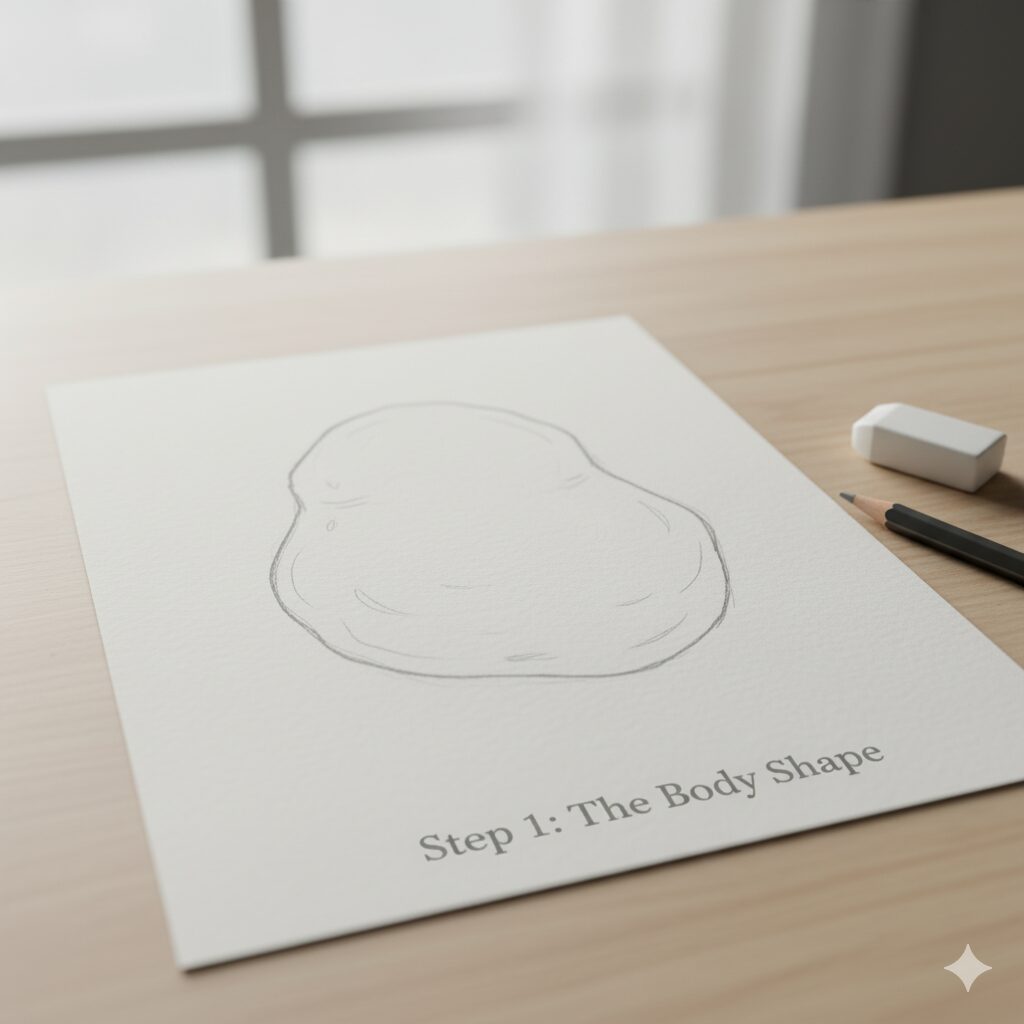
Step 1: The Body Shape
Forget perfect circles. For this character, let’s start with a lumpy, irregular shape. It could be a wobbly circle, a lumpy oval, or a potato shape. This will be the main body of our character.
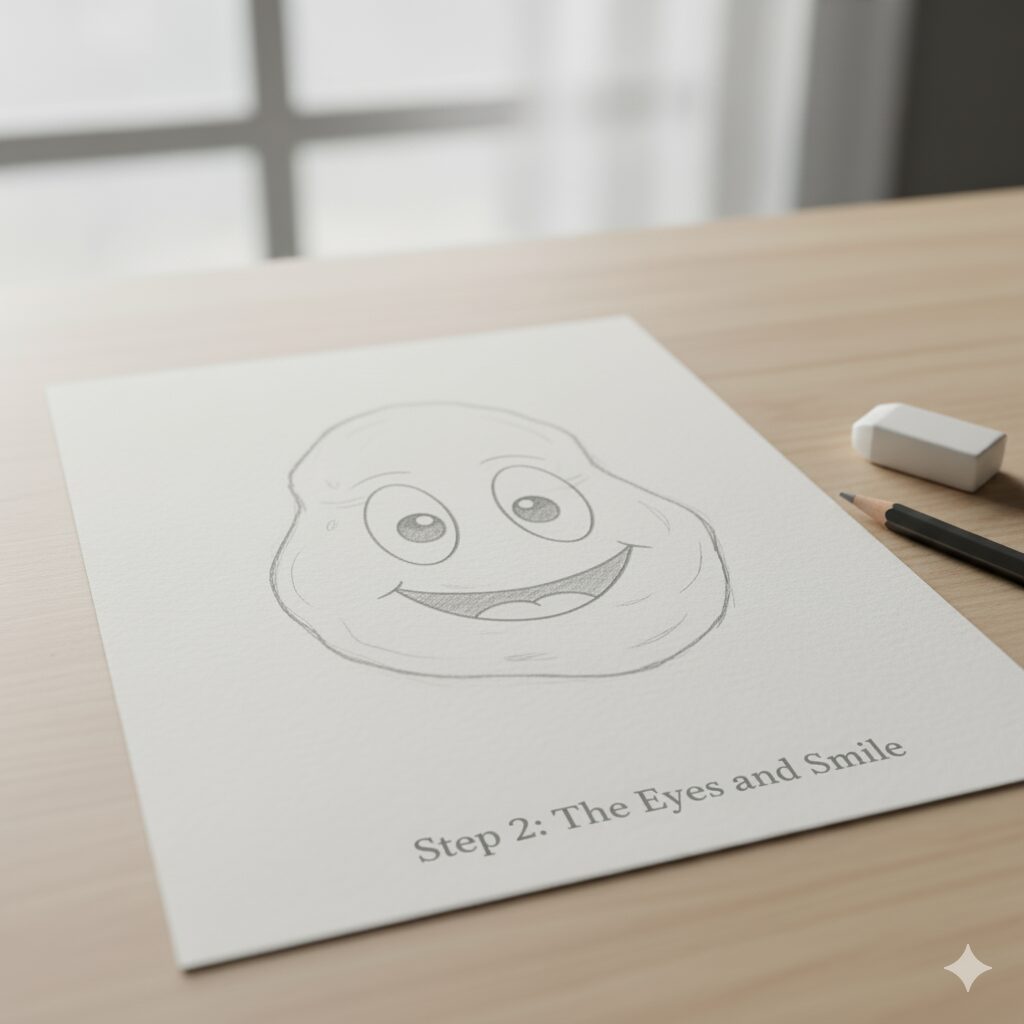
Step 2: The Eyes and Smile
The eyes are the most important part of a cartoon character. They show emotion and personality. For a simple, happy character, draw two large ovals for the eyes. You can add a smaller circle inside each oval for the pupils. For the mouth, a big, curved smile will instantly give your character a friendly personality. You can even add a small, U-shaped tongue.
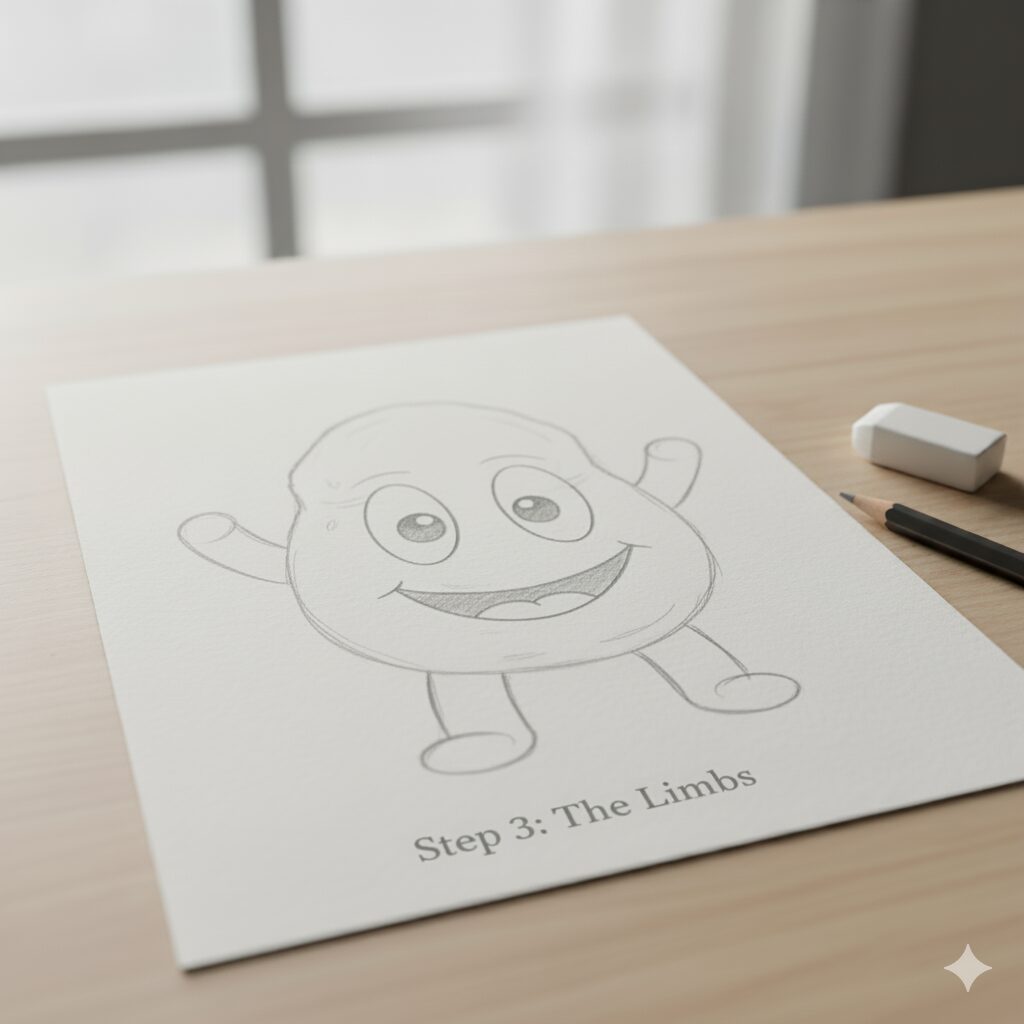
Step 3: The Limbs
Cartoons don’t need complex anatomy. For arms and legs, you can draw simple, sausage-like shapes or even just two lines with circles on the end for hands and feet. Position them on the body shape to suggest an action, like waving or standing.
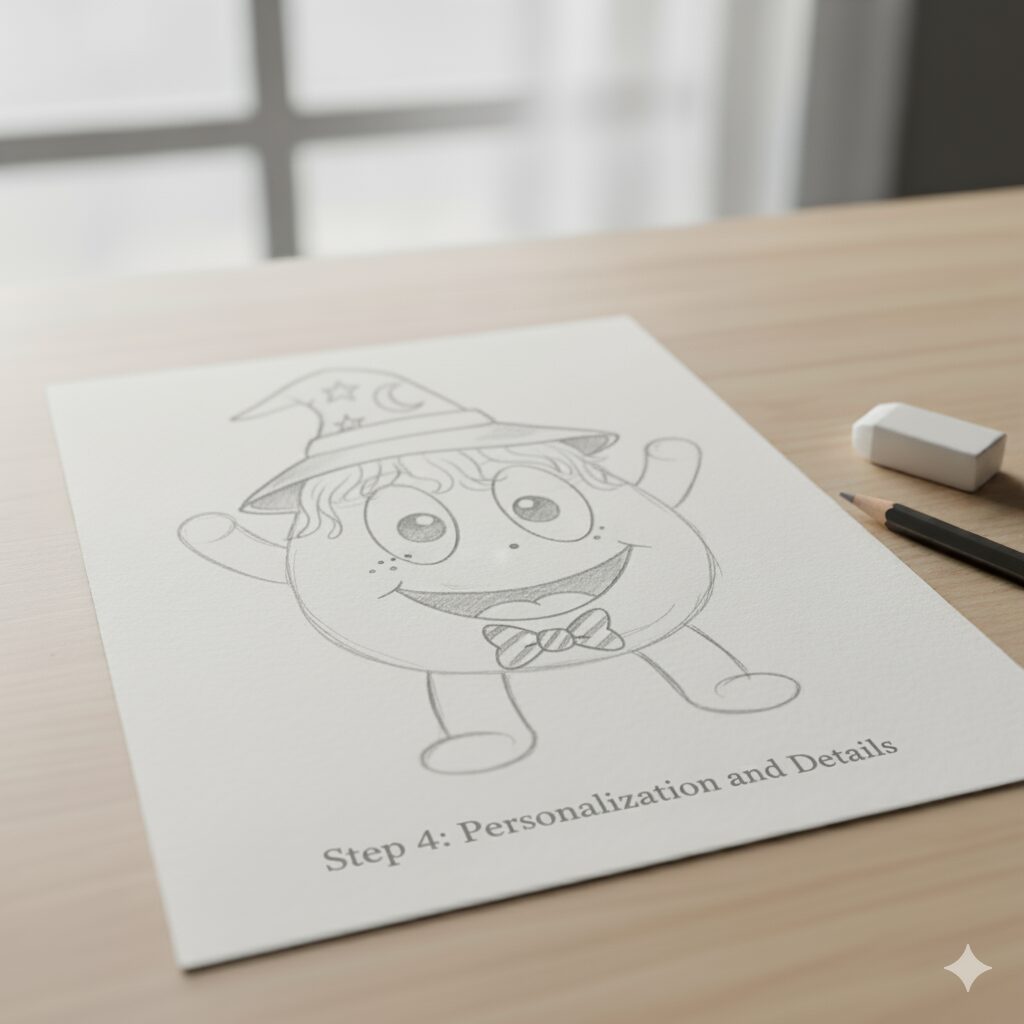
Step 4: Personalization and Details
This is where your character truly comes to life. What makes your character unique? Maybe it’s a big, floppy hat on top of their head. Or a few freckles. Perhaps a bow tie, some hair, or even a tiny scar. These small details give your character a story.
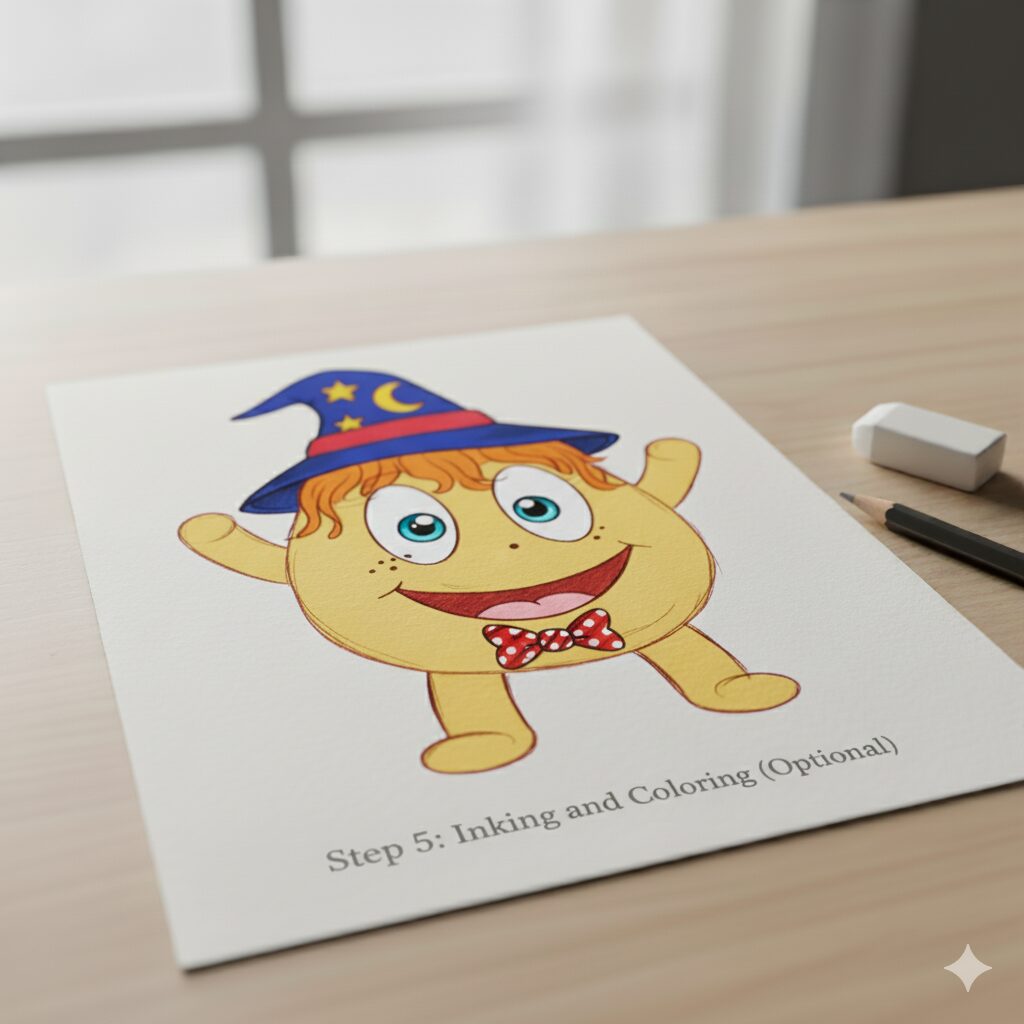
Step 5: Inking and Coloring (Optional)
Once you’re happy with your sketch, you can go over the final lines with a black pen or marker to make them stand out. Then, grab your colored pencils or crayons and give your character a vibrant personality! Cartoons thrive on bright colors.
Remember, the fun of cartoons is the freedom. You don’t have to stick to any rules. Your character can have three eyes, an extra arm, or a rainbow-colored body. It’s all up to your imagination.
What’s Next? Your Drawing Journey Has Just Begun.
Now that you’ve successfully drawn an animal, a flower, and a cartoon character, you have the fundamental tools to draw almost anything. The “see in shapes” principle is your superpower.
Practice Makes Progress: The key to getting better is simple: keep drawing. Grab a sketchbook and try to draw something every day. It could be the coffee mug on your desk, the lamp next to your bed, or a simple tree outside your window. Look at them not as complex objects, but as a collection of shapes.
Draw from Life and Photos: Don’t feel pressured to draw from your imagination all the time. Look at reference photos online or simply draw the objects around you. This is how artists improve their observation skills.
Don’t Be Afraid of “Bad” Drawings: Every artist has a pile of drawings they’re not happy with. That’s part of the process. It’s not a mistake; it’s a stepping stone to a better drawing. The most important thing is that you’re trying.
Every great artist, from Leonardo da Vinci to Walt Disney, started with a single line. The first line is often the hardest, but you’ve already made it. So grab your pencil, find a blank page, and start today. The only “mistake” is not trying at all.
Final Thoughts
Do not mistake “easy” for “trivial.” Drawing simple forms is not busy work; it is the structural foundation of all art . Before you can fracture the perspective of a face like Picasso , you must understand the weight and geometry of a sphere . This is the grind. It is not glamour . It is the necessary discipline required to force your hand to obey your eye .
Ignore the hollow perfection of the algorithm that can generate these shapes in a microsecond . Your trembling line has a soul that the machine lacks . Pick up the pencil. Impose your will on the paper . Then do it again.
FAQs: How to Draw Easy Subjects
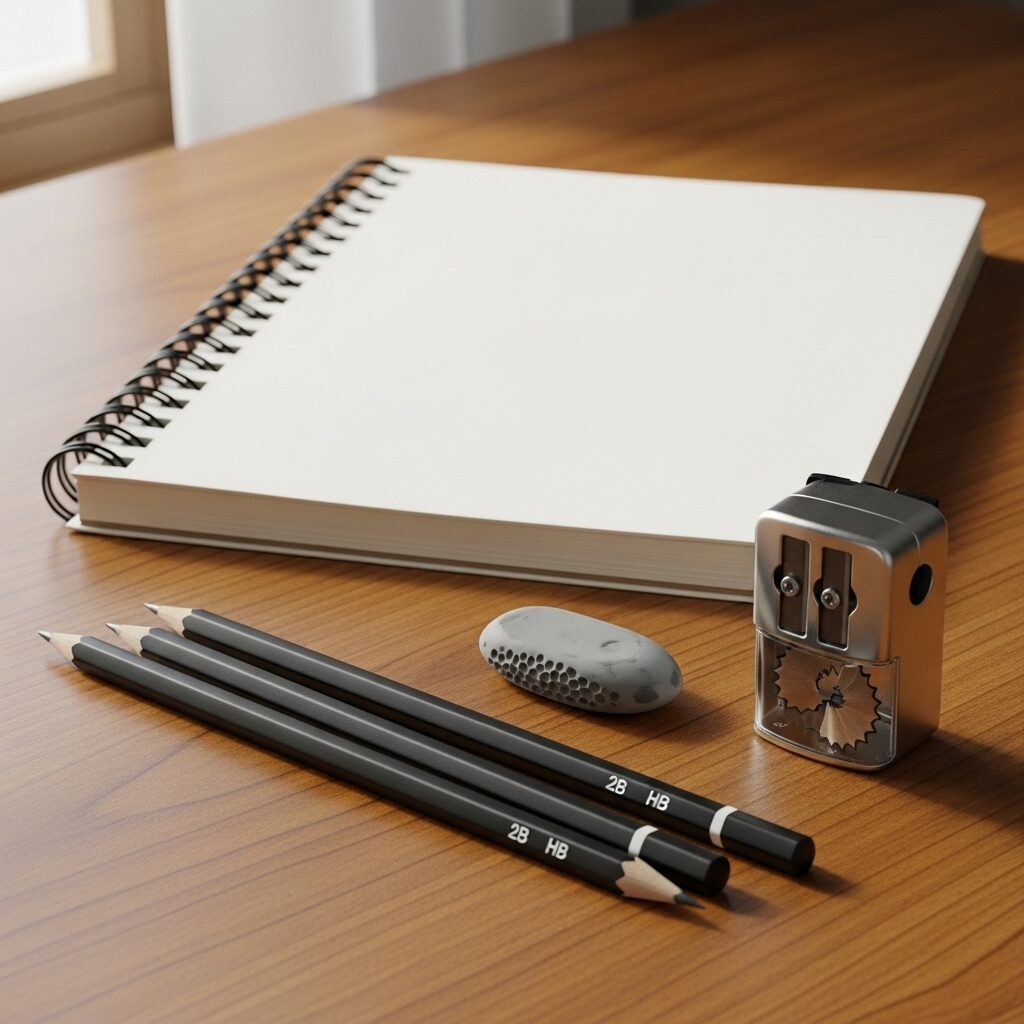
Q1: What are the essential drawing supplies for a beginner? You don’t need expensive materials to start. All you truly need is a simple graphite pencil (an HB or 2B is great for beginners), a good quality eraser (a plastic or kneaded eraser works well), and a sketchbook or drawing paper.
Q2: How can I get better at drawing if I can only draw simple subjects? The key to improvement is consistent practice and observation. Continue to draw simple subjects every day, but also challenge yourself by looking at objects in your home and breaking them down into basic shapes. The more you train your eye to see the underlying forms, the better you’ll become.
Q3: How do I learn to draw without looking at an image? Drawing from memory is a skill built on a foundation of drawing from life and reference. Start by drawing the same simple object (like a mug or a fruit) repeatedly. As you practice, your brain will begin to store that information, allowing you to eventually draw it from memory. Even professional artists use reference images!
Q4: What are some other easy subjects to draw for practice? Beyond animals, flowers, and cartoons, some other great subjects for beginners include simple geometric shapes, everyday objects like a cup or a book, a single leaf, a tree, or even your own hand (using simple shapes for the palm and fingers).
Q5: Is it necessary to take drawing classes to get good? While classes can be very helpful, they are not essential. The most important thing is consistent practice. With the vast number of free online resources, tutorials, and communities, you have everything you need to learn at your own pace.
Citations:
1. How to Draw Anything – Learn Sketching for Beginners | Julia Bausenhardt
This comprehensive guide supports your “see in shapes” philosophy and step-by-step approach to breaking down complex subjects into basic forms. The author provides detailed instruction on starting with basic shapes, refining lines, and building drawing skills progressively.
2. Absolute Beginner Drawing Exercises Tutorial – EasyDrawingTips
Perfect for supporting your fundamental approach to drawing practice. This source covers essential drawing exercises like straight lines, curved lines, and basic geometric shapes – aligning perfectly with your article’s emphasis on foundational skills.
3. The Basic Skills of Drawing: Learn to Draw For Beginners | Medium
An authoritative source written by a professional artist that reinforces your key concepts about simplifying complex subjects into basic shapes and the importance of light guidelines in the drawing process.
4. How to Draw Basic Shapes | Creative Bloq
This source from a respected creative industry publication supports your teaching that all complex forms can be broken down into basic shapes like cubes, cylinders, and spheres.
5. Drawing Fundamentals: The Definitive Guide | How To Practice Drawing
A comprehensive resource covering linear drawing, mark-making, and gesture drawing that supports many of the fundamental concepts discussed in your article about building drawing skills systematically.
6. Easy Drawing Guides – Step-by-Step Drawing Tutorials
This educational resource provides step-by-step drawing tutorials for beginners, supporting your approach of teaching through simple, progressive instruction for subjects like animals, flowers, and cartoon characters.