Have you ever looked at a painting that seems to move? One where the clothes rustle, the trees sway, and the faces feel so alive you half-expect them to smile or speak? If you have, you might have been looking at a work by Thomas Gainsborough. This 18th-century English artist revolutionized portrait painting with his unique approach that critics once called “careless,” but we now recognize as pure genius. Thomas Gainsborough’s painting techniques were so different from his contemporaries that they created a completely new way of seeing art – one that captured life and movement like never before.
Key Points Summary
- Revolutionary “Feathery Brushwork”: Gainsborough developed a loose, fluid painting style that gave his subjects incredible life and movement
- Liquid Paint Technique: He used thin oil paints applied with long, quick strokes from a distance
- Portrait-Landscape Fusion: Unlike other artists, he combined portraiture with his love for landscape painting
- Natural Light Master: His understanding of light and shadow created paintings that seemed to glow from within
- Artistic Rebellion: His techniques challenged the formal academic style of his time and influenced future art movements
The Revolutionary Artist Who Changed Everything
Thomas Gainsborough was born in Suffolk, England, in 1727, surrounded by the rolling countryside that would become his greatest inspiration. While other artists of his time focused on creating smooth, polished surfaces, Gainsborough developed what became known as his signature “feathery brushwork.” This technique involved using loose, flowing strokes that seemed almost careless up close but created stunning effects when viewed from a proper distance.
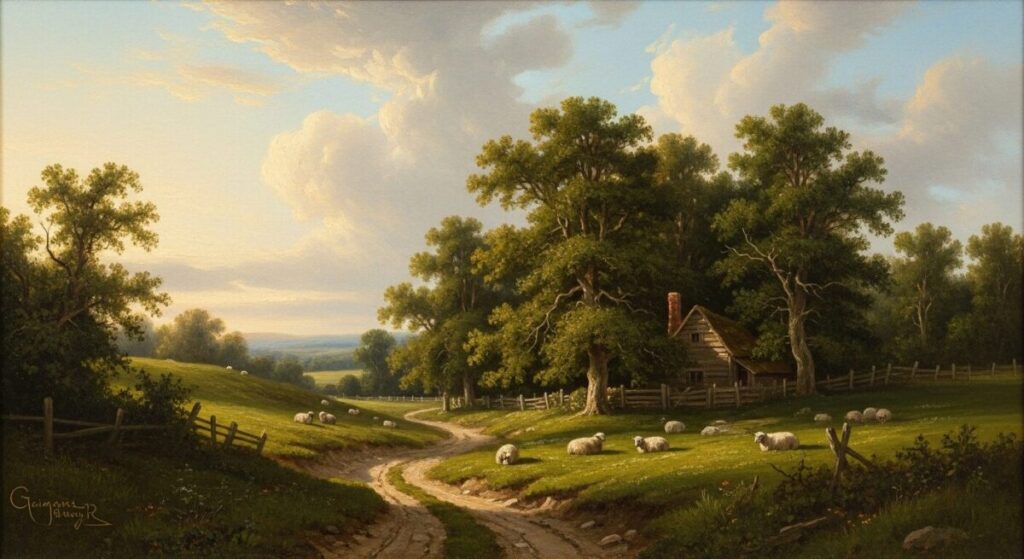
What made Thomas Gainsborough’s painting techniques so special? Unlike his famous rival Sir Joshua Reynolds, who believed in the smooth, academic style of the Italian Renaissance masters, Gainsborough trusted his instincts. He painted what he felt, not just what he saw. Art historian Michael Rosenthal perfectly captured this when he described Gainsborough as “one of the most technically proficient and, at the same time, most experimental artists of his time.”
The artist’s approach was influenced by the French Rococo art paintings: The Playful Revolution in 18th-Century Europe, which emphasized lightness, elegance, and natural beauty. However, Gainsborough took these ideas and made them uniquely his own, creating a style that would influence artists for centuries to come.
The Secret Behind His “Liquid” Paint Technique
One of the most fascinating aspects of Thomas Gainsborough’s painting techniques was his use of what he called “liquid paint.” Instead of using thick, heavy oils like most artists, Gainsborough thinned his paints to create a more flowing consistency. This allowed him to work quickly and capture spontaneous effects that would be impossible with traditional thick paint applications.
His brushes were specially chosen for this technique. He preferred brushes with long handles, which allowed him to step back from the canvas while painting. This distance gave him a better view of the overall composition and helped him create those famous loose strokes that look like random marks up close but form perfect details from afar.
Gainsborough vs. Reynolds: A Tale of Two Techniques
| Aspect | Thomas Gainsborough | Sir Joshua Reynolds |
|---|---|---|
| Brushwork Style | Loose, feathery, visible strokes | Smooth, polished, hidden brushwork |
| Paint Application | Thin, liquid paints | Thick, traditional oil paints |
| Painting Distance | Worked from a distance with long brushes | Worked close to canvas |
| Subject Preference | Landscapes (though painted portraits for income) | Grand manner portraits |
| Artistic Philosophy | “Studied carelessness” and natural expression | Academic precision and classical ideals |
| Legacy | Influenced Impressionism and Romanticism | Founded the Royal Academy of Arts |
The rivalry between these two masters pushed both artists to excel. While Reynolds represented the establishment and formal training, Gainsborough was the self-taught rebel who proved that breaking rules could create something extraordinary.
Thomas Gainsborough’s Painting Techniques in Famous Works
The Blue Boy: A Masterclass in Motion

Perhaps no painting better demonstrates Thomas Gainsborough’s painting techniques than his famous “The Blue Boy.” This masterpiece shows a young boy in an elaborate blue satin suit, but what makes it special isn’t the subject – it’s how Gainsborough painted it.
The blue satin fabric seems to shimmer and catch light in ways that make it appear almost alive. Gainsborough achieved this effect through his layering technique. Instead of painting the background first and then adding the subject, he worked on the entire canvas simultaneously, building up thin layers of color that interacted with each other.
This painting was also rumored to be Gainsborough’s response to Reynolds’s claim that blue could never be the dominant color in a successful portrait. If that’s true, then “The Blue Boy” is not just a beautiful painting – it’s a artistic statement that proved Reynolds wrong in the most spectacular way possible.
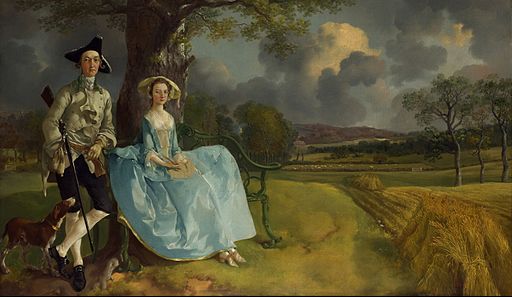
Mr. and Mrs. Andrews: Where Portrait Meets Landscape
“Mr. and Mrs. Andrews” perfectly shows how Gainsborough combined his two loves: portraiture and landscape painting. The wealthy couple sits in the foreground, but the real star of the painting is the expansive English countryside behind them.
This painting reveals another key aspect of Thomas Gainsborough’s painting techniques: his ability to make formal portraits feel natural and relaxed. While other artists posed their subjects in stiff, artificial positions, Gainsborough captured people as they might actually appear in real life.
For more insights into how artists reveal hidden meanings in their work, explore our guide on famous painting secrets and their hidden stories.

The Technical Details That Made the Magic
Understanding Thomas Gainsborough’s painting techniques requires looking at the specific methods he used to create his effects:
The “Hatching Style of Penciling”
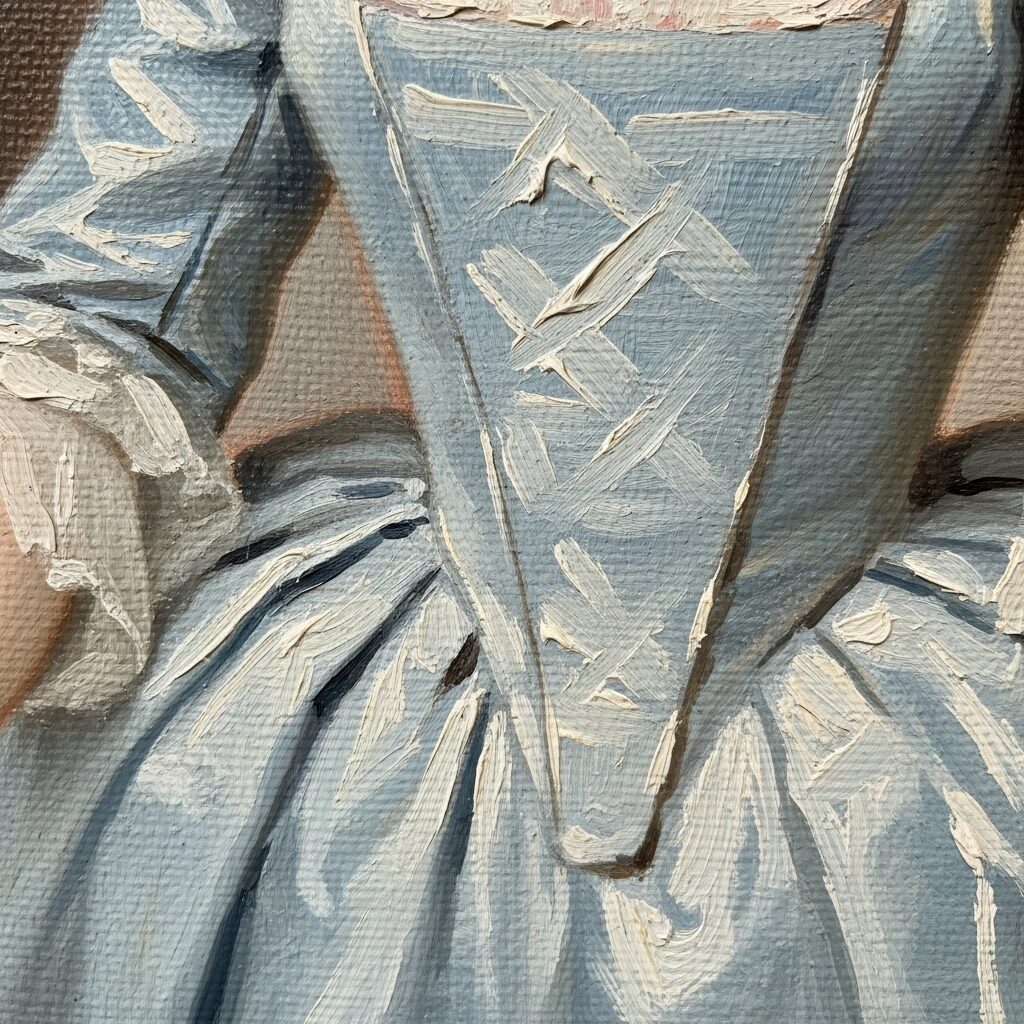
Gainsborough developed a unique crosshatching technique using thin brushes. He would create a network of light and dark strokes that, when viewed from the proper distance, would blend together to create incredibly realistic textures and forms. This technique was particularly effective for painting fabrics, hair, and foliage.
Working Wet-on-Wet
Unlike artists who waited for each layer to dry completely, Gainsborough often worked “wet-on-wet,” applying new paint over areas that were still damp. This technique allowed colors to blend naturally on the canvas and contributed to the soft, atmospheric quality of his work.
The Long-Handle Brush Technique
By using brushes with extended handles and stepping back from his canvas, Gainsborough could see his work from the viewer’s perspective while painting. This gave him better control over the overall composition and helped him achieve those perfectly imperfect strokes that look effortless but require incredible skill.
Modern artists can learn from these techniques by exploring our comprehensive guide on mastering the art of brush stroke painting.
The Man Behind the Masterpieces
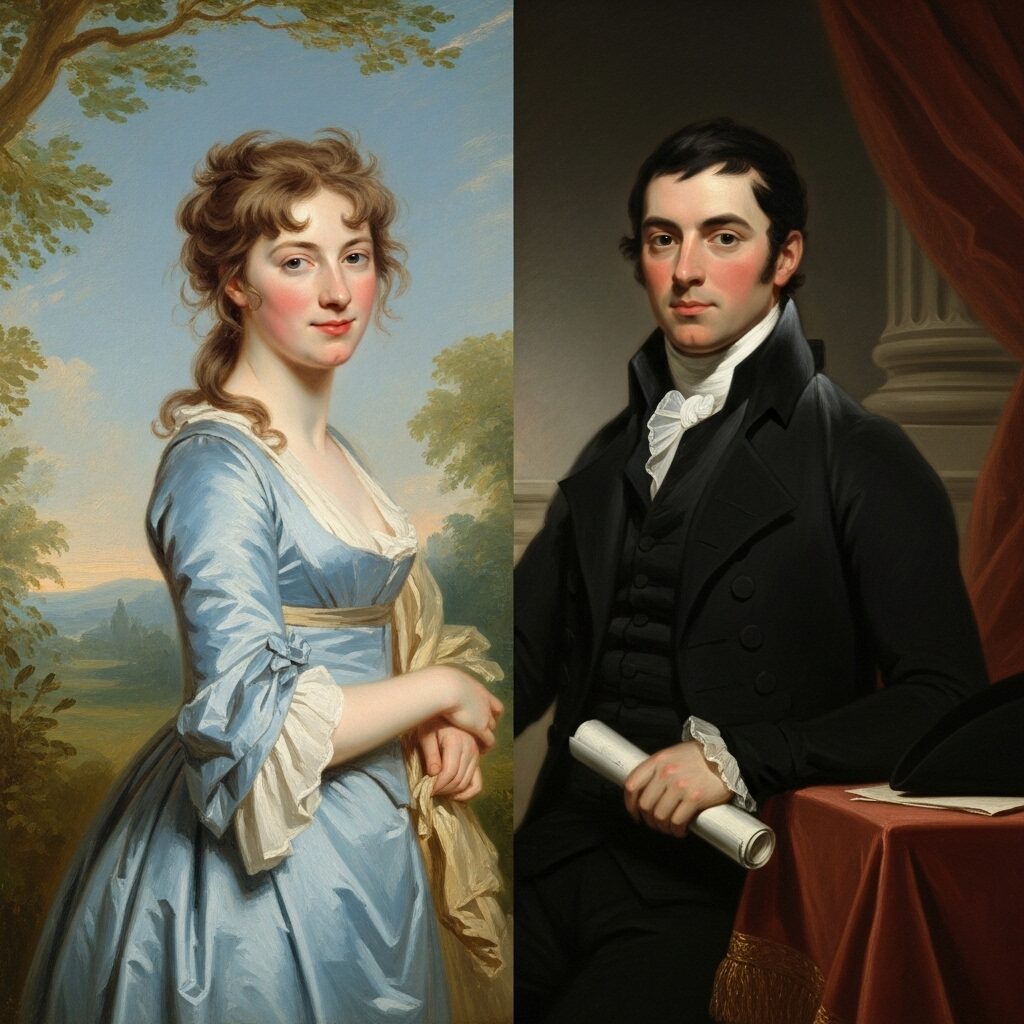
Understanding Thomas Gainsborough’s painting techniques means understanding the man himself. Born into a modest family, Gainsborough was largely self-taught, which may explain why he felt free to break the artistic rules of his time. Unlike many of his contemporaries who studied in Italy, Gainsborough found his inspiration in the English countryside he knew and loved.
“I’m sick of portraits and wish very much to take my viol da gamba and walk off to some sweet village where I can paint landscapes.”
Thomas Gainsborough
This quote reveals the artist’s true passion. While he became famous for his portraits of the wealthy and powerful, his heart was always with landscape painting. This love for nature shows in even his most formal portraits, where he often included outdoor settings and natural backgrounds.
His easy-going personality and love of music (he was an accomplished viola da gamba player) influenced his painting style. Just as his music was flowing and natural, so was his brushwork. This connection between his personality and his art is what made his work so distinctive and appealing.
To learn more about how artists’ personal lives influenced their work, read about the inspiring lives of famous artists.
Watch: Thomas Gainsborough Documentary
The Legacy of Gainsborough’s Innovation
Thomas Gainsborough’s painting techniques didn’t just create beautiful art – they changed the entire direction of painting. His loose, expressive brushwork and emphasis on capturing light and atmosphere would later influence the Impressionist movement. Artists like John Constable and J.M.W. Turner built upon Gainsborough’s innovations, and traces of his influence can be seen in the work of Claude Monet and Pierre-Auguste Renoir.
His approach to portraiture was equally revolutionary. By making formal portraits feel natural and by combining portraiture with landscape painting, Gainsborough created a new way of representing people that felt more honest and human than the stiff, formal portraits of his predecessors.
The Royal Academy, despite Gainsborough’s sometimes contentious relationship with it, eventually recognized his genius. Today, his works hang in major museums around the world, and art students still study his techniques to understand how loose, seemingly careless brushwork can create such powerful effects.
For a broader understanding of how Gainsborough fits into art history, explore our painting styles and movements: a comprehensive guide.
Modern Applications of Gainsborough’s Methods
Today’s artists can learn valuable lessons from Thomas Gainsborough’s painting techniques:
For Oil Painters:
- Experiment with thinning your paints for more fluid application
- Try working wet-on-wet to achieve natural color blending
- Use longer brushes and step back frequently to see your work from the viewer’s perspective
For Digital Artists:
- Use brush settings that mimic Gainsborough’s loose, flowing strokes
- Layer colors transparently to build up atmospheric effects
- Don’t be afraid of visible brush marks – they add life to your work
For Any Medium:
- Focus on capturing the essence of your subject rather than every detail
- Use light and shadow to create mood and dimension
- Combine different subjects (like portraits and landscapes) in unexpected ways
Understanding these techniques provides insight into fine art: a comprehensive guide and shows how breaking conventional rules can lead to artistic breakthroughs.
Despite facing financial struggles like many artists of his time (learn more about famous artists and poverty), Gainsborough’s innovative spirit and unique vision created a lasting impact that continues to inspire artists today.
Conclusion
Thomas Gainsborough’s painting techniques revolutionized 18th-century art by proving that loose, expressive brushwork could create more life and movement than the smooth, polished style favored by the artistic establishment. His “feathery brushwork,” liquid paint application, and natural approach to light and composition created paintings that still captivate viewers nearly three centuries later. By studying Gainsborough’s methods – from his use of long-handled brushes to his wet-on-wet painting technique – modern artists can learn how breaking rules and following their instincts can lead to truly innovative art. Whether you’re a beginning painter or an experienced artist, Thomas Gainsborough’s painting techniques offer timeless lessons about the power of artistic courage and the magic that happens when technical skill meets creative freedom.
FAQ
Q: What made Thomas Gainsborough’s painting style unique? A: Thomas Gainsborough’s painting style was unique because of his “feathery brushwork” – loose, flowing strokes that created life and movement in his paintings. Unlike other artists who hid their brushwork, Gainsborough celebrated visible strokes that seemed careless up close but created stunning effects from a distance.
Q: Why was The Blue Boy painting so revolutionary? A: The Blue Boy was revolutionary because it challenged the artistic establishment’s belief that blue couldn’t be the dominant color in a portrait. Gainsborough’s masterful use of loose brushwork made the blue satin suit appear to shimmer and move, proving that technical skill mattered more than color rules.
Q: How did Gainsborough’s rivalry with Reynolds influence his art? A: The rivalry pushed Gainsborough to develop his distinctive style in contrast to Reynolds’s formal, academic approach. While Reynolds championed smooth, polished surfaces, Gainsborough embraced visible brushwork and natural expression, ultimately influencing future art movements like Impressionism.
Q: What was Gainsborough’s “liquid paint” technique? A: Gainsborough thinned his oil paints to create a more flowing consistency, allowing him to work quickly and capture spontaneous effects. This technique, combined with long-handled brushes, let him paint from a distance and create those famous loose strokes that formed perfect details when viewed properly.
Q: Why did Gainsborough prefer painting landscapes over portraits? A: Despite his fame for portraits, Gainsborough’s true passion was landscape painting. He found greater joy in capturing the natural beauty of the English countryside than in painting formal portraits of wealthy clients, though he painted portraits for financial necessity.
Citations
- The Art Story: “Thomas Gainsborough: Paintings, Biography, and Ideas.” The Art Story. Retrieved from https://www.theartstory.org/artist/gainsborough-thomas/
- The National Gallery: “Thomas Gainsborough.” The National Gallery, London. Retrieved from https://www.nationalgallery.org.uk/artists/thomas-gainsborough
- The Tate: “Painting the Picture – In Focus.” Tate. Retrieved from https://www.tate.org.uk/research/in-focus/muilman-crokatt-keable-thomas-gainsborough/the-painting/painting-the-picture
- Britannica: “Thomas Gainsborough: English Landscape Painter & Portrait Artist.” Britannica. Retrieved from https://www.britannica.com/biography/Thomas-Gainsborough
- Royal Museums Greenwich: “Joshua Reynolds and Thomas Gainsborough: rivalry in focus.” Royal Museums Greenwich. Retrieved from https://www.rmg.co.uk/stories/art-culture/art-rivalry-thomas-gainsborough-sir-joshua-reynolds
- OpenEdition Journals: “Thomas Gainsborough’s “Carelessness”: Portraiture, Technique and Individuality.” OpenEdition Journals. Retrieved from https://journals.openedition.org/interfaces/8648