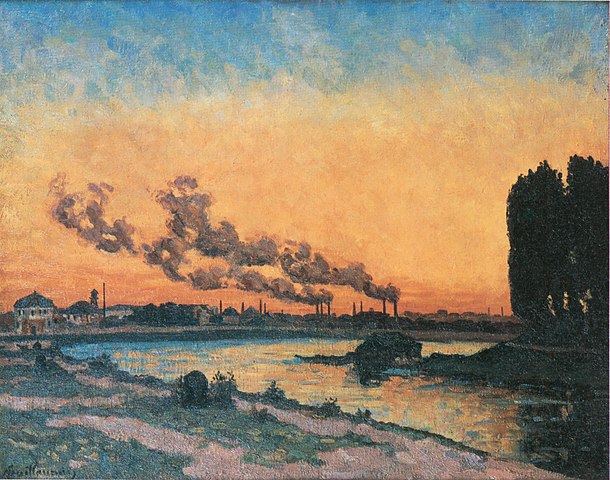
I’ll never forget a quiet afternoon spent in the garden, trying to capture the iridescent blue of a butterfly with my watercolors; it reminded me so much of the way Vermeer handled light—subtle, fleeting, and utterly captivating. That little creature didn’t stay still for long, but it sparked a fascination with delicate wing patterns that I carried into my classroom for over a decade.
A truly captivating journey awaits us here as we delve into the world of drawing butterflies. Few creatures capture the imagination quite like they do, with their vibrant colors and those intricate designs that seem painted by nature itself.
But here is the thing about drawing them: it is not just about replicating a photo. It is about understanding the form, the symmetry, and the soft, subtle beauty of the details.
This easy, step-by-step guide is perfect for beginners looking to try their hand at butterfly drawing. We are going to transform simple lines into a graceful masterpiece, breaking it down into manageable pieces just like I used to do for my students.
So, are you ready to master drawing a butterfly? Let’s take those simple lines and turn them into something beautiful, bringing a little bit of that garden magic onto your page.
You will Learn:
- Begin with basic shapes to form the butterfly’s body and antennae.
- Master symmetrical drawing techniques to create balanced and beautiful wings.
- Add intricate wing patterns and delicate veins for a realistic appearance.
- Explore various shading and coloring methods using different art supplies.
- Embrace observation and practice to develop your unique artistic expression in every butterfly drawing.
The Essential Foundation: Starting Your Butterfly Sketch
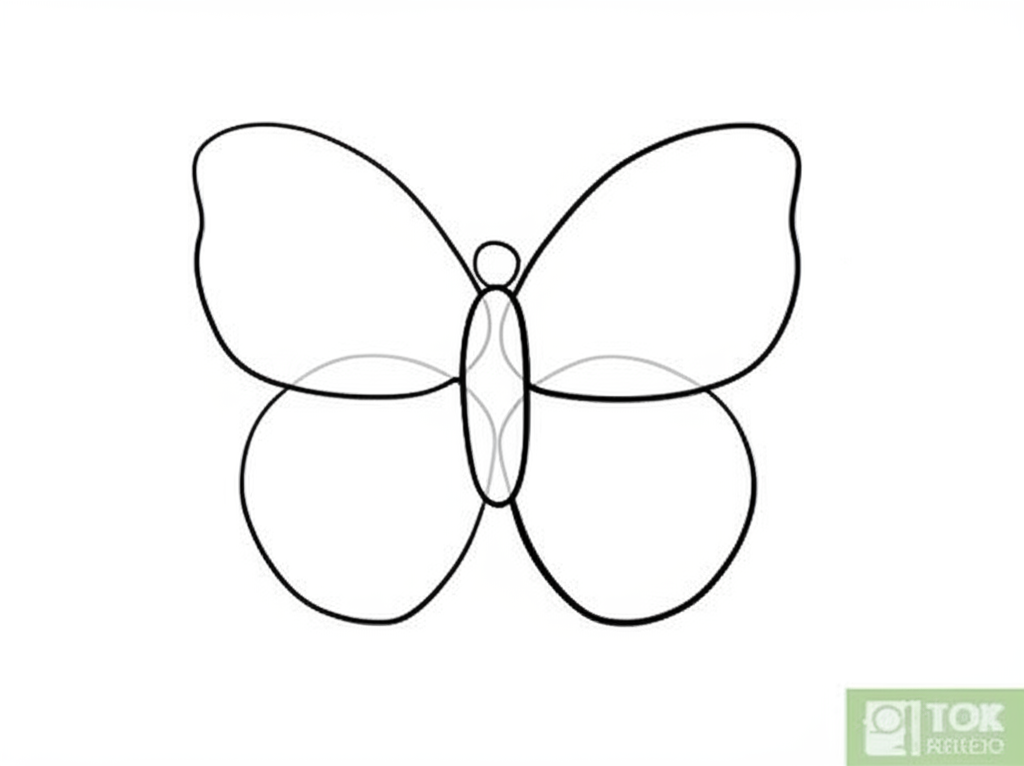
Embarking on drawing a butterfly begins with establishing a solid foundation. This initial sketch phase is crucial for any beginner butterfly drawing. A simple butterfly sketch starts not with the wings, but the body. To start your drawing, imagine a central vertical line for symmetry. At the top, draw a small, elongated oval for the head. Below it, create a slightly larger oval for the thorax. Finally, add a longer, tapering oval for the abdomen. These three connected segments form the backbone of your butterfly. This is the best way to draw a butterfly for kids, simplifying initial complexities.
Once the body is in place, add the antennae. From the top of the head, draw two delicate, curved lines extending upwards and outwards. Depending on the species, these might have small tips. These details contribute to the realism of your drawing a butterfly. Keep initial lines light with a pencil for easy adjustments. If you’re eager to learn to draw butterflies, mastering this body structure is a key first step.
Every masterpiece starts with a single line! Here, we see the foundational shapes that give our butterfly its perfect symmetry.
Crafting the Wings: Shape, Symmetry, and Proportion
The wings are arguably the most captivating feature when drawing a butterfly, demanding careful attention to shape and symmetry. Achieving balanced butterfly art is paramount. This section focuses on drawing symmetrical wings and establishing correct proportion.
Begin by lightly extending your central guide line from the body outwards, creating a subtle ‘X’ shape for balance when making butterfly wings symmetrical. Each side typically has two main wings: a larger upper wing (forewing) and a smaller lower wing (hindwing).
For the upper wings, sketch a large arc or elongated oval on each side of the thorax, extending upwards and outwards. The top edge is often straighter, the bottom curves gently. Ensure both upper wings are roughly the same size and shape, mirroring each other.
Next, focus on the lower wings. Below the upper wings, draw smaller, more rounded shapes like petals or bowed triangles for the hindwings. Aim for butterfly symmetry, ensuring proportional and balanced lower wings. Using guide lines for butterfly drawing makes this smoother. Use your eraser to refine shapes. Tips for drawing symmetrical butterfly wings often emphasize stepping back. Mastering the basic steps for drawing a butterfly involves patience and a keen eye.
Watch your butterfly take flight as you refine its contours and add those intricate wing veins! This stage is all about precision and detail.
Beyond the Outline: Adding Intricate Wing Patterns and Veins
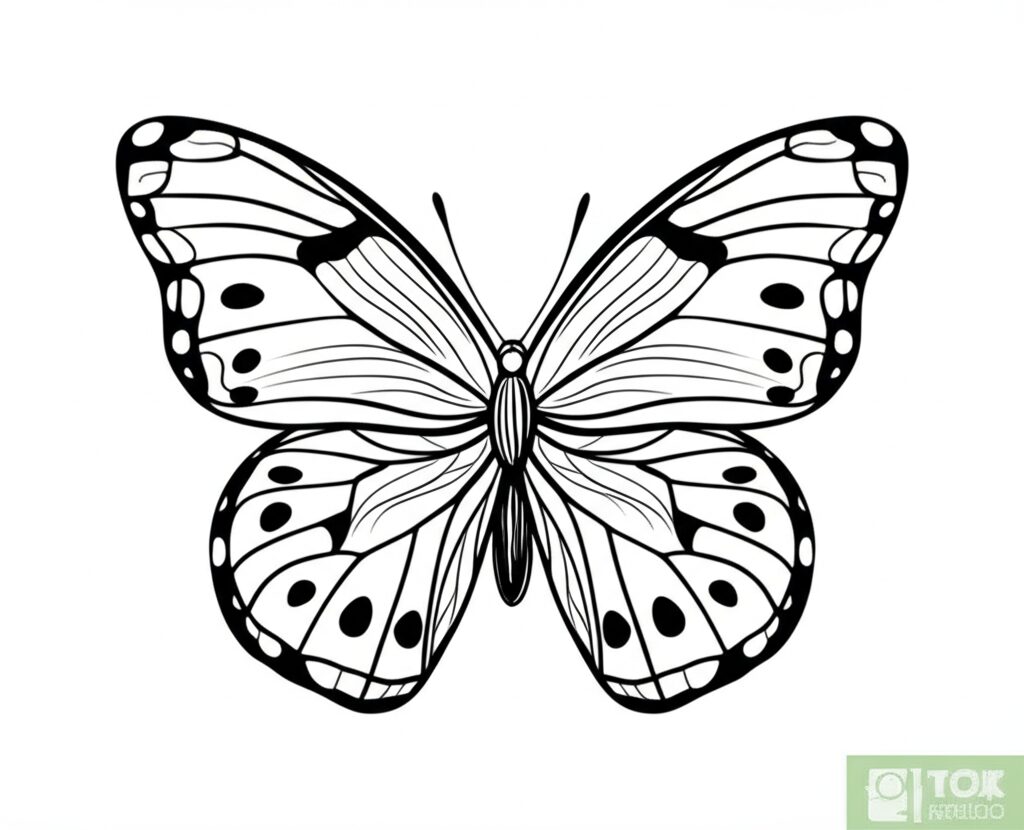
With your butterfly drawing’s basic form, it’s time for intricate wing patterns and details. Your simple butterfly sketch transforms, showcasing unique beauty. Mastering butterfly details drawing brings realism and depth.
Butterfly wings are delicate structures crisscrossed with veins and adorned with species-specific patterns. To draw realistic butterfly wings, sketch the wing veins. These thin lines radiate from the base of each wing, branching out towards the edges. Observe reference images for their organic flow. Veins add texture to your drawing a butterfly.
Once veins are established, add internal patterns. These range from simple spots and stripes to complex designs like on a Monarch butterfly (raindrop-like on forewings, oval on hindwings). You might find “m” shaped lines or circles within other species’ wings. Observation is your powerful art technique. Study photos to depict intricate butterfly patterns accurately. Adding patterns to butterfly wings can be meditative. This detailed butterfly wing design tutorial step is essential for truly engaging art.
Discover the magic of monochrome! With just a pencil, you can bring remarkable depth and realism to your butterfly. Notice the interplay of light and shadow on its delicate wings.
Bringing Your Butterfly to Life: Shading, Coloring, and Finishing Touches
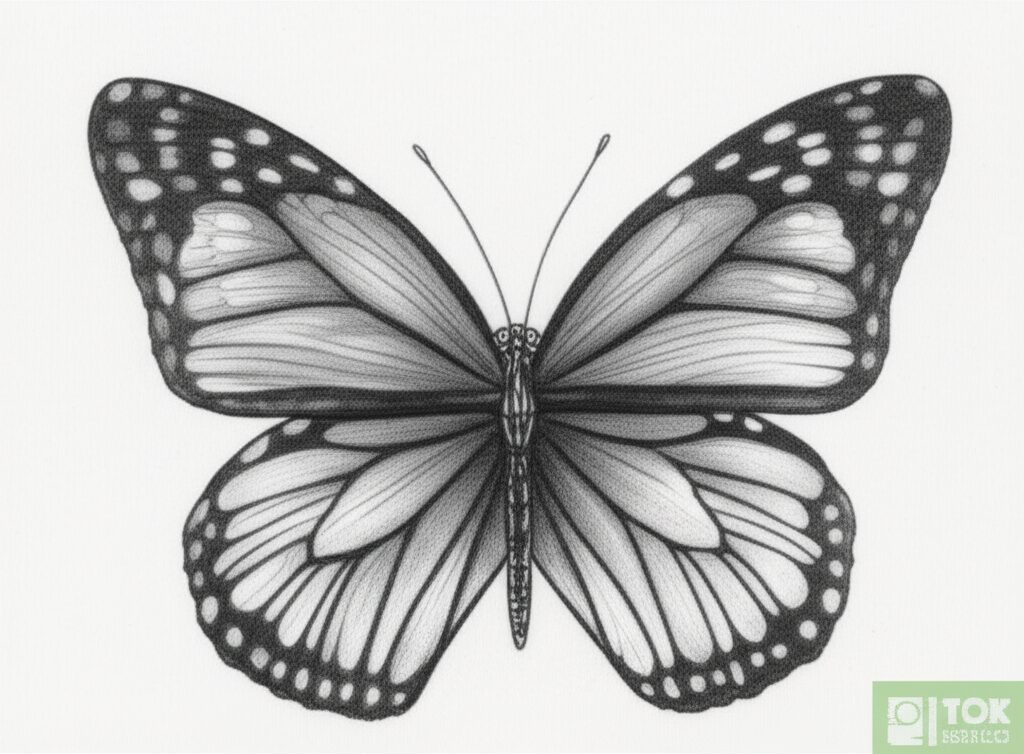
After outlining and detailing your butterfly drawing, the final stage is adding color and shading. This brings your butterfly drawings to life, giving them depth and vibrancy. Whether you prefer watercolor butterfly art or colored pencil butterfly techniques, this section guides adding color to drawings.
Choose your art supplies. Pencils are for sketching; for coloring, watercolors, colored pencils, or markers offer distinct advantages. With watercolors, start with a light wash, drying before applying concentrated layers. “Blow painting” creates organic effects along inner wing edges.
When coloring butterfly drawings, think light and shadow. Shading is crucial for depth. Use lighter strokes where light hits and darker tones for shadows, especially along wing veins and where wings meet the body. The head and thorax can be darker, with a white highlight. The abdomen might feature subtle horizontal curves and a lighter fill.
Experiment with different butterfly art process approaches. Colored pencils build layers gradually, blending hues for smooth transitions. Markers provide bold coverage; use good marker paper. Patience and detail are key to finishing touches for butterfly drawings. Small highlights make your drawn butterfly appear ready to take flight.
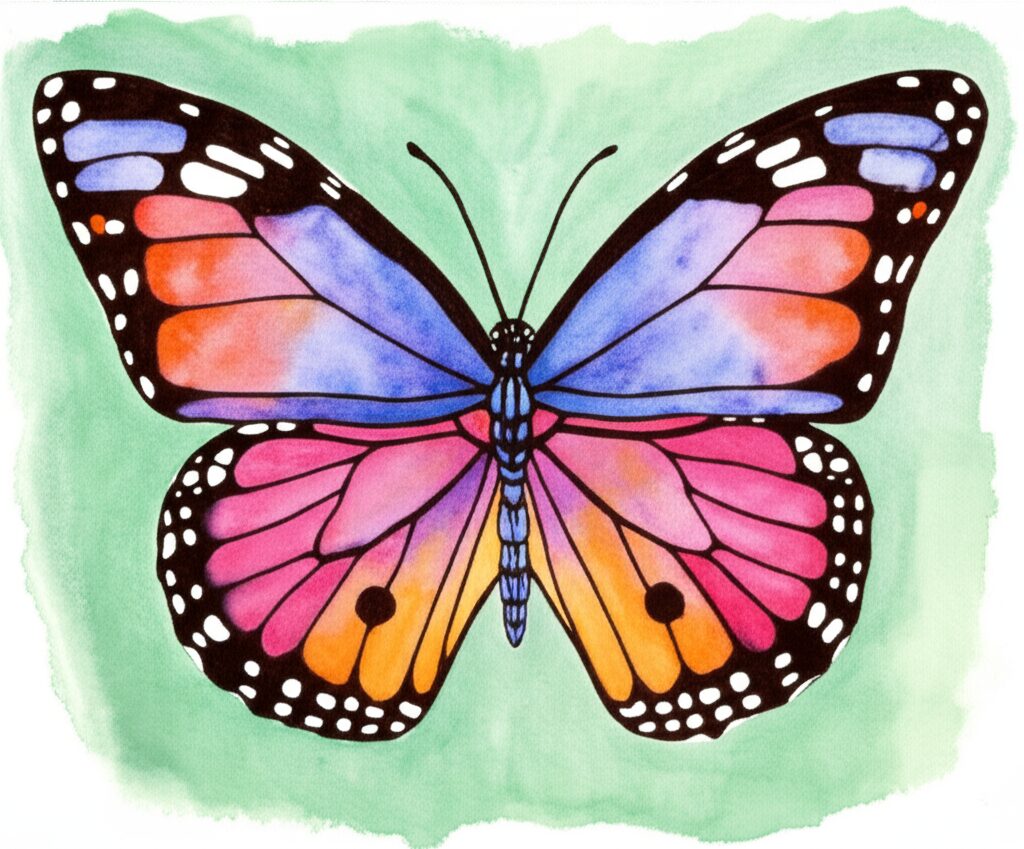
Dive into the spectrum of colors with this stunning watercolor butterfly! The fluid blends and vibrant hues truly make it come alive. What color palette would you choose for your next nature-inspired artwork?
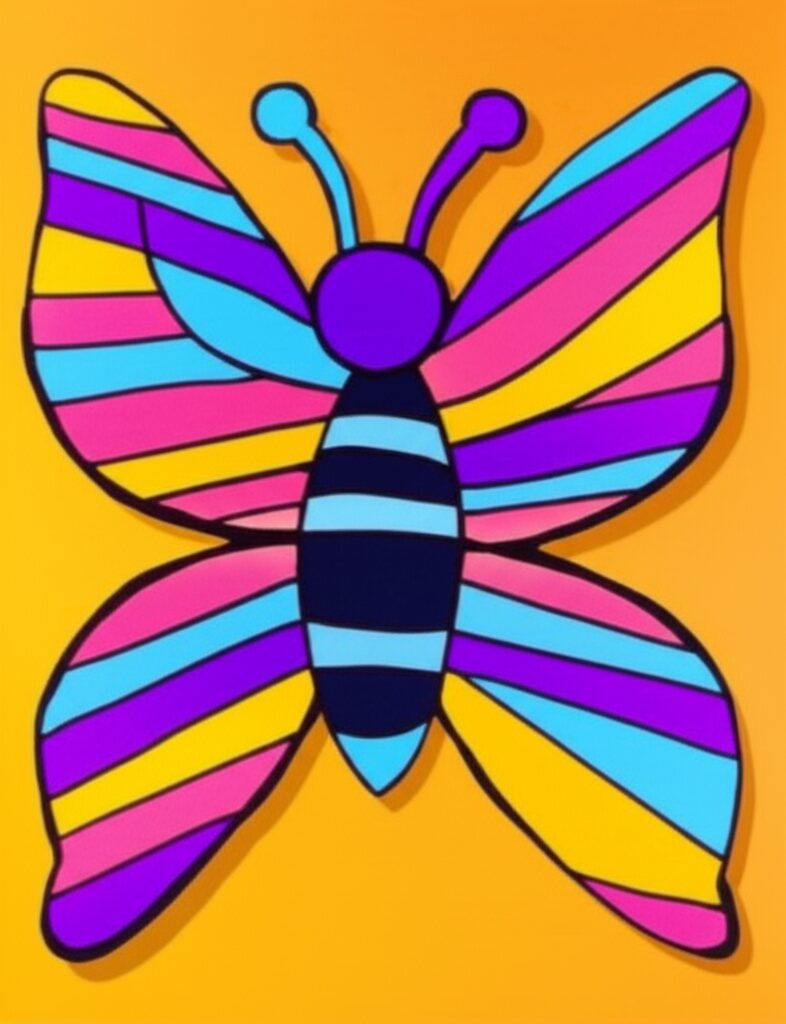
Unleash your inner artist with this fun, stylized butterfly! Experiment with bold colors and playful patterns to create a design that’s uniquely yours.
Final Thoughts on Mastering Butterfly Drawing
The journey of drawing a butterfly is incredibly rewarding, offering endless opportunities for creativity. From initial basic shapes to final colors, each step brings a delicate creature to life. This easy butterfly drawing tutorial for beginners provides a comprehensive guide, but consistent practice is key. Experiment with different butterfly drawing techniques, art supplies, and draw inspiration from nature. Your unique artistic style will evolve, making each butterfly drawing a reflection of your growing skill and passion. Keep sketching, learning, and enjoying the process.
Top Butterfly Drawing Themes and Artists
| Drawing/Artwork Name | Artist/Source | Style/Concept | Notable Features |
|---|---|---|---|
| Peonies and Butterfly | Katsushika Hokusai | Japanese Woodblock Print | Symbolic, delicate details |
| Butterflies in Vanitas Paintings | Maria van Oosterwyck | Dutch Golden Age | Realistic, symbolic |
| Monarch Butterfly Drawing | Various (tutorial series) | Realistic Sketch | Detailed wings, iconic pattern |
| Blue Morpho Butterfly Drawing | Various | Realistic/Color pencil | Vivid blues, fine detailing |
| Butterfly Mandala Drawing | Various | Mandala/Line Art | Symmetrical, decorative |
| Whimsical Butterfly Drawing | Various | Fantasy/Cartoon | Playful shapes, imaginative |
| Butterflies in Kaleidoscope Paintings | Damien Hirst | Mixed Media/Kaleidoscopic | Real butterfly wings, pattern |
| Butterfly and Flowers Drawing | Various | Scene/Line Art | Botanical motifs, soft shading |
| Butterfly Scratchboard Drawing | Various | Scratchboard | High contrast, textured |
| Endangered Species: Butterfly Motif | Andy Warhol | Silkscreen Print | Pop-art style, commercialism |
FAQs: Drawing Butterflies
Q. How to draw a butterfly for beginners?
To draw a butterfly for beginners, start by sketching the body (head, thorax, abdomen) using simple oval shapes. Then, add two antennae. Next, draw the basic symmetrical shapes for the upper and lower wings on both sides of the body. Gradually refine the outlines, add wing veins, and then incorporate patterns before finally coloring and shading your artwork.
Q. What are the basic steps to draw a butterfly?
The basic steps involve creating the body as a central anchor, adding antennae, then sketching the four wings symmetrically. After the main shapes are established, you refine the contours, add internal wing patterns and veins, and complete the drawing with shading and coloring.
Q. How do you start drawing a butterfly’s body?
Begin by drawing a small oval for the head at the top, followed by a slightly larger oval for the thorax (middle body section). Conclude with a longer, tapering oval for the abdomen. These three connected shapes form the central structure of your butterfly.
Q. How do I draw symmetrical butterfly wings?
To draw symmetrical butterfly wings, it’s helpful to first draw a light central guide line through the body and extend it horizontally. Then, sketch the basic wing shapes on one side, and carefully mirror those shapes on the opposite side, using your guide lines for alignment. Regularly step back to check for balance and use an eraser to make adjustments as needed.
Q. What shapes are used to draw butterfly wings?
Common shapes used for butterfly wings include large arcs or elongated ovals for the upper wings and smaller, more rounded shapes like petals, bowed triangles, or teardrops for the lower wings. These initial shapes serve as guides that are later refined into more organic, curved forms.
Q. How do you add patterns and details to butterfly wings?
After outlining the wings, add details by first drawing thin wing veins radiating from the base outwards. Then, introduce internal patterns such as spots, stripes, circles, or teardrop shapes, observing reference images for species-specific designs. Ensure these patterns maintain the overall symmetry of the butterfly.
Q. How do I draw butterfly wing veins?
Draw butterfly wing veins by sketching thin lines that originate from the point where the wings attach to the body. These lines should fan out towards the edges of the wings, often branching as they extend. Reference images are invaluable for understanding the natural, organic flow of these delicate structures.
Q. What materials do I need to draw a butterfly?
For drawing a butterfly, essential materials include a pencil (preferably H or HB for sketching), an eraser, and drawing paper. For coloring and finishing, you might use colored pencils, markers, watercolors, or acrylic paints, along with appropriate brushes or blending tools.
Q. How do you color a butterfly drawing?
To color a butterfly drawing, choose your preferred medium. Apply lighter base layers of color, then gradually build up darker shades to create depth and dimension, especially along the wing veins and body. Add highlights with lighter colors or by leaving areas of paper exposed to suggest light reflection.
Q. What are some tips for drawing butterflies?
Some key tips for drawing butterflies include: starting with light pencil sketches, focusing on achieving symmetry, using reference images for accurate patterns and details, taking breaks to observe your work from a fresh perspective, and most importantly, practicing regularly to refine your skills and develop your unique artistic style.
Continue your artistic journey by visiting https://prominentpainting.com for more drawing and painting guides.