
You don’t just read an art book; you inhabit it. Whether it is a massive retrospective of Abstract Expressionism that weighs as much as a small dog, or a delicate, hand-bound artist book, these objects serve as the physical memory of the art world.
However, for the uninitiated, the world of art publishing can be intimidating. Why does one monograph cost $40 while a similar-looking one costs $400? Why do collectors obsess over “GSM” paper weight? If you want to buy art books like a pro in 2026, you need to stop thinking like a reader and start thinking like a curator.
This guide moves beyond the “best of” lists. We are diving into the technical specs of printing, the economics of rare editions, and the secrets of preservation. By the end of this article, you will know exactly what you are paying for and how to build a library that appreciates in value and beauty.
Discover Your Next ART Book
Popular Book Searches:
Watercolor Painting | Oil Painting | Sketching | Figure Drawing | Pop Culture | Monet | Basquiat
Top Art Books for Artists (Updated Weekly)
Key Takeaways for the 2026 Collector:
- Quality Metrics: Learn why 157 GSM paper is the minimum standard for high-end art reproductions.
- Valuation: Understand the difference between a “First Edition” and a “First Printing.”
- Market Trends: Why “Ultra-Contemporary” monographs are the hottest sector in the 2026 market.
- Preservation: The specific humidity levels required to stop “foxing” (paper rust).
Anatomy of an Art Book: What You Are Actually Paying For
When you buy a novel, you are paying for the story. When you buy art books, you are paying for the architecture of the book itself. To the curator, a book is a piece of technology designed to deliver color and texture accurately.

The Hierarchy of Formats
Not all art books are created equal. Understanding the format is the first step in assessing value.
- Monographs vs. Biographies: A biography tells the life story of an artist, often text-heavy with a few image plates in the center. A Monograph is a comprehensive visual survey of the artist’s work. If you are looking for inspiration on oil painting techniques, you want a monograph, not a biography.
- The Holy Grail: The Catalogue Raisonné: This is the most expensive and authoritative type of art book. It lists every known work by an artist. They often cost $500 to $2,000+. Galleries and auction houses use these to verify authenticity. If you are serious about building a private art collection, these are essential reference tools.
- Exhibition Catalogues: These are published to accompany a specific museum show. They are often the best “bang for your buck.” They represent a historical snapshot of a specific time and theme, such as a deep dive into Impressionism at the Met.
- Artist Books: These are not books about art; they are art. Produced in limited editions (sometimes signed), these fall under the category of conceptual art and are highly collectible.
Technical Specs That Define Quality (The “Feel” Factor)
Have you ever opened an art book and felt that the images looked “flat” or the pages felt cheap? That is a failure of technical specification.
Paper Quality (GSM)
GSM stands for Grams per Square Meter. It measures the density of the paper.
- 80-100 GSM: Standard printer paper or novel paper. Images will bleed through to the other side.
- 115-135 GSM: decent magazine quality.
- 157 GSM+: The “Curator’s Standard.” At this weight, paper becomes opaque. You won’t see the image from the next page ghosting through. High-end books from publishers like Taschen often go up to 200 GSM for a luxurious feel.
Coated vs. Uncoated Paper
This is a stylistic choice.
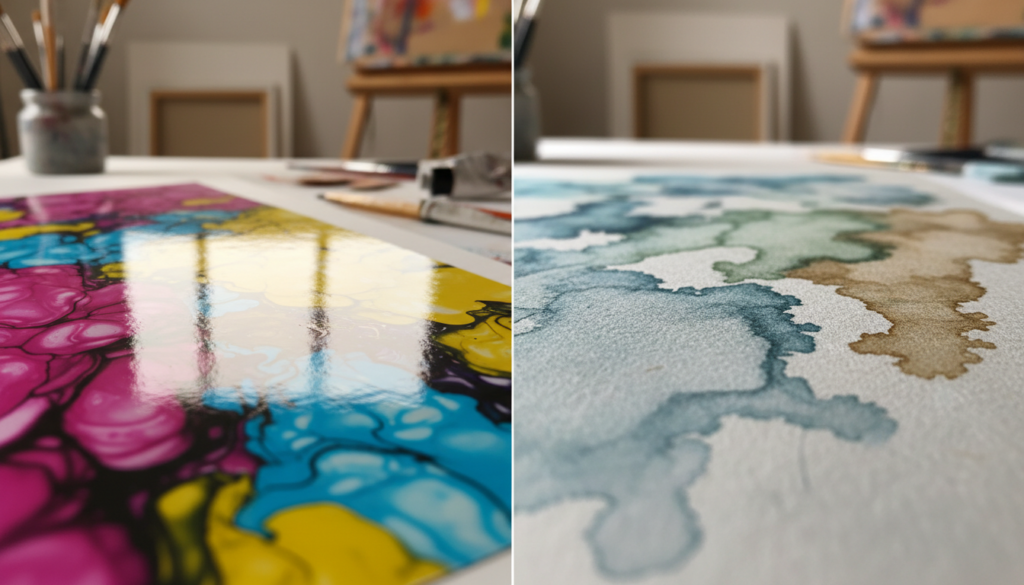
- Coated (Gloss/Silk): The paper has a clay coating. Ink sits on top of the paper, resulting in sharp details and vibrant colors. This is ideal for Pop Art or photography.
- Uncoated: The ink soaks into the paper fibers. It feels softer and more organic, often preferred for watercolor painting reproductions or sketches, giving them a “fine art” feel.
Binding Types
- Smyth-sewn: Signatures (groups of pages) are stitched together. The book lays completely flat when open. This is crucial for viewing panoramic landscapes that span two pages.
- Perfect Bound: Pages are glued to the spine. These books snap shut and the spine will crack if you force them flat. Avoid this for expensive purchases.
The Global Marketplace: Where to Buy Art Books in 2026
The landscape of buying art books has shifted. While Amazon is convenient, it is rarely where the true gems are found.
The Heavyweights (New & Pre-Order)
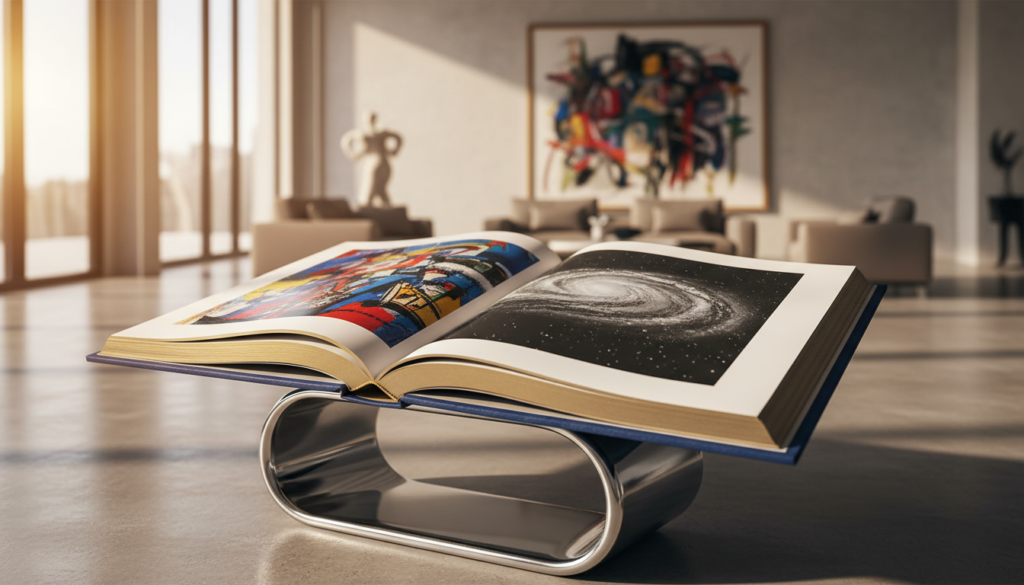
- Taschen: The master of spectacle. Famous for their “SUMO” editions—books so large they come with their own stand. They range from the affordable “Basic Art Series” (great for learning famous artists and their styles) to $50,000 collector’s items.
- Phaidon: The academic standard. Their books are rigorous, often text-heavy, and beautifully designed. If you want to understand the theory behind Modern Art, start here.
- Thames & Hudson / Rizzoli: These publishers have excellent distribution and partnerships with major museums. They are the go-to for high-quality coffee table books.
- Steidl: A German publisher known for obsession. Robert Steidl personally oversees the printing. Buying a Steidl book is like buying a piece of sculpture.
The Treasure Hunt (Used, Rare & Out-of-Print)
If you are looking for out-of-print (OOP) treasures, you need to dig deeper.
- Online Aggregators: AbeBooks and Biblio are indispensable. Pro Tip: Use the “Advanced Search” to filter by “First Edition” and “Signed.”
- The “Big Three” Indies: If you travel, these are pilgrimages:
- Strand Bookstore (NYC): 18 miles of books. Their rare room is legendary.
- Powell’s Books (Portland): An entire city block of books.
- Shakespeare and Company (Paris): High prices, but unmatched provenance and atmosphere.
- Auctions: For rare items, look at Swann Galleries or specific “Books & Manuscripts” sales at Sotheby’s. eBay is useful, but beware of misidentified editions.
Smart Money: Market Trends & Investment Potential
Is buying art books a good investment? It can be, but it is a slow burn compared to the art market trends for 2025.
The State of the Art Book Market (2024-2026)
While global art sales saw a slight contraction recently (~4% down), the market for tangible collectibles is growing. As digital art and AI art flood the screen, collectors are craving the physical permanence of paper.
Data Snapshot: The Economics of Art Publishing
| Metric | Data / Standard | Why it Matters |
|---|---|---|
| Global Art Sales (2023/24) | ~$65 Billion | Indicates overall market health. |
| Online Art Sales Growth | +7% Year over Year | More people are buying art/books sight-unseen. |
| Standard Art Book Paper | 157 GSM | Below this, images bleed through (ghosting). |
| Ideal Storage Temp | 65-70°F (18-21°C) | Prevents glue from drying or melting. |
| Mold Risk Threshold | >65% Relative Humidity | The danger zone for “Foxing”. |
Valuation Factors
- Scarcity: The “Out of Print” (OOP) premium is real. Once a monograph from a trendy artist (like a limited edition Banksy book) sells out, prices on the secondary market can triple overnight.
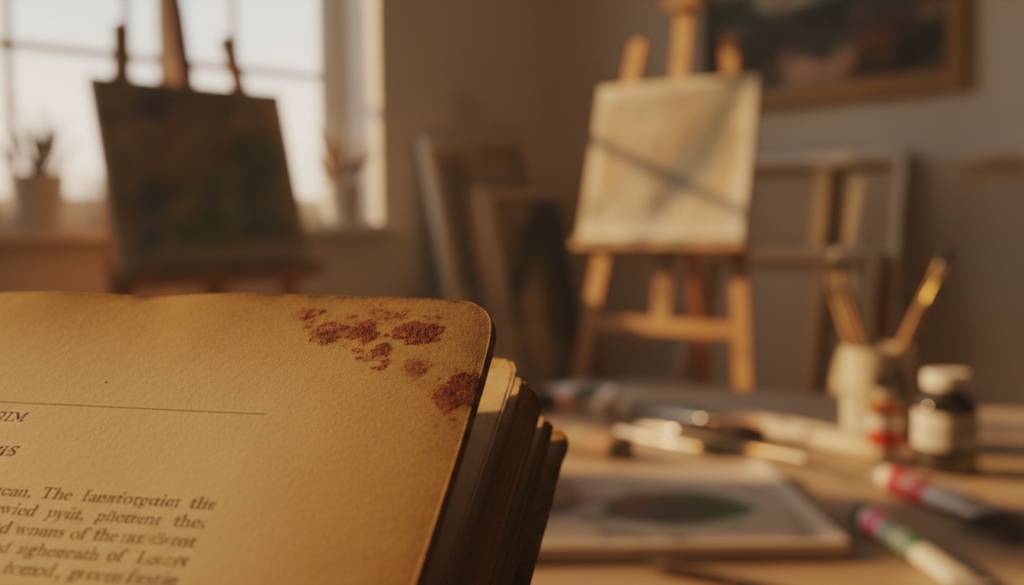
- Condition & Foxing: “Foxing” refers to reddish-brown spots that appear on old paper due to oxidation and mold. In the world of book collecting, condition is everything. A book is graded from “Fine” (F) to “Reading Copy.” Serious investors only buy “Fine” or “Near Fine.”
- Provenance: A library stamp usually lowers value unless it was the personal library of a famous artist. Imagine finding a book on Cubism owned by Picasso!
The 2025-2026 Art Book Fair Calendar
If you want to discover art and books that never hit Amazon, you must attend an Art Book Fair. These events are where independent publishers launch their wildest projects.
Why Attend a Fair?

Fairs are not just shops; they are cultural happenings. You can meet the artists, get books signed (instant value increase), and find limited runs of 50 or 100 copies.
Major Events to Track
- NY Art Book Fair (Printed Matter): usually held in Spring or Fall at MoMA PS1 or similar venues. It is the Super Bowl of art books.
- LA Art Book Fair: The West Coast counterpart, focusing heavily on zines, photography, and street art.
- Offprint (London/Paris): A curated market focusing on contemporary photography and image-making.
Preservation: Protecting Your Collection
You have spent the money; now you must protect the asset. Heavy coffee table books are physically unstable objects.
Environmental Control
- Temperature: Aim for the “Goldilocks” zone of 65-70°F (18-21°C).
- Humidity: This is critical. Keep Relative Humidity (RH) between 40-55%.
- Below 40%: Paper becomes brittle and bindings crack.
- Above 65%: Mold spores germinate, and foxing accelerates.
Storage & Handling

- The Gravity Rule: Never store a large, heavy art book vertically (standing up). The weight of the pages will eventually pull away from the spine, known as “text block sag.” Always stack heavy books horizontally.
- UV Filters: Sunlight is a laser beam of destruction. It fades cover art and yellows pages. Keep your collection away from direct windows or use UV-filtering glass on your bookcases.
FAQs: Common Buyer Questions
Is it worth buying digital art books?
For research? Yes. For appreciation? No. Digital screens (RGB) transmit light, while physical prints (CMYK) reflect light. The color experience is fundamentally different. Plus, you cannot display a PDF on your coffee table to signal your taste in Surrealism.
How do I ship a heavy art book without damaging corners?
The “bumped corner” is the most common shipping tragedy.
- Wrap the book in acid-free paper.
- Wrap in two layers of large-bubble bubble wrap.
- Crucial: Use a box that leaves 2 inches of space on all sides, and fill that space tightly with packing peanuts or crushed paper. The book should not move at all when you shake the box.

What is the difference between a “First Edition” and “First Printing”?
This confuses everyone.
- First Edition: The very first version of the book design and text.
- First Printing: The first batch of that edition coming off the press.
- Collectors want the First Edition, First Printing. A “First Edition, Third Printing” means the book was popular and they turned the machines back on. It is less valuable.
Can I clean a dirty art book cover?
Be very careful. For glossy dust jackets, a tiny amount of lighter fluid (naphtha) on a soft cloth can remove sticky residue without damaging the gloss. However, for uncoated cloth covers, do not use water. Consult a professional conservator.
By applying these curator-level strategies—checking the GSM, hunting for First Printings, and storing your volumes horizontally—you transform from a passive consumer into an active guardian of art history.